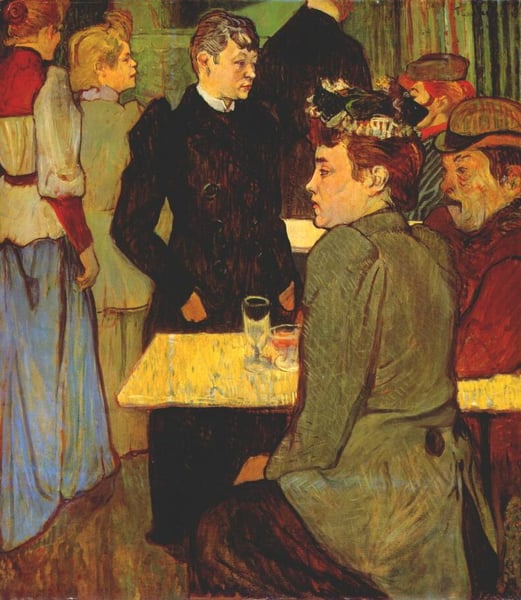
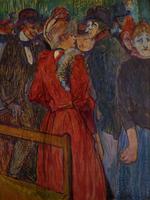
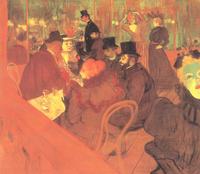
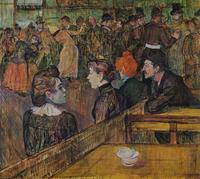
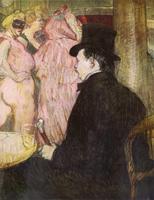
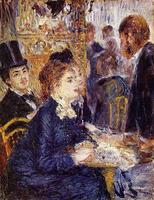
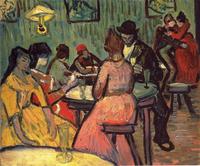
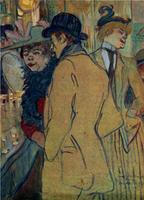
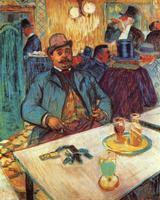
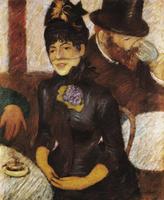
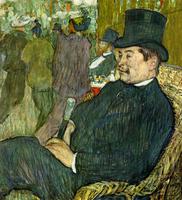
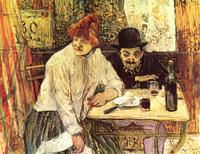
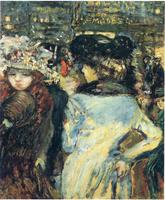
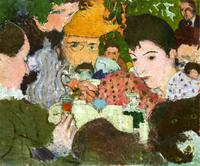
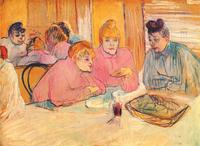
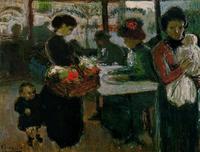
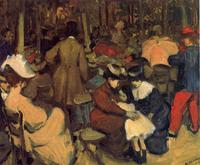
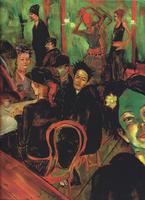
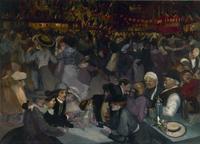
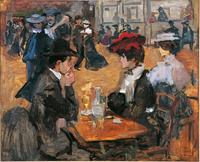
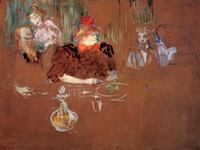
This artwork, a genre painting by Henri de Toulouse-Lautrec, holds significance for its fusion of Post-Impressionist expressive form with the decorative linearity of Art Nouveau (Modern) style. The work captures a candid, intimate corner of the famed Moulin de la Galette, elevating a specific social space into a symbol of modern Parisian leisure. Its importance lies in how Toulouse-Lautrec’s compositional choices—emphasizing flattened planes, rhythmic outlines, and a subjective, often voyeuristic viewpoint—transform a genre scene into a distinctly modern visual commentary, bridging the emotional depth of Post-Impressionism and the aesthetic ornament of Art Nouveau.