
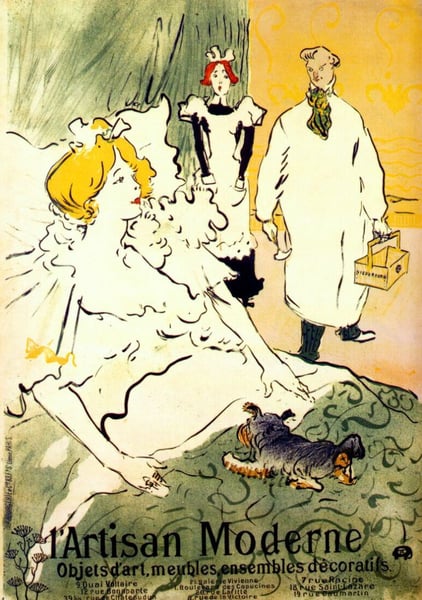
Craftsman modern
Expert analysis of Henri de Toulouse-Lautrec’s Craftsman modern
Style: Art Nouveau (Modern) · Genre: genre painting
As an expert in art history, I offer this analysis based solely on the provided facts.
Analysis: "Craftsman modern" by Henri de Toulouse-Lautrec
Significance within Art Nouveau and Genre Painting
Henri de Toulouse-Lautrec’s "Craftsman modern" is a significant work that bridges two critical facets of late 19th-century visual culture: the decorative elegance of Art Nouveau and the observational honesty of genre painting. While Toulouse-Lautrec is perhaps best known for his depictions of Parisian nightlife, this piece reorients his modern eye toward the world of labor and craft—a subject often romanticized by the Arts and Crafts movement that paralleled Art Nouveau.
Key Significance:
-
Elevation of the Craftsman as a Modern Subject
In "Craftsman modern," Toulouse-Lautrec applies the sinuous linework, flattened pictorial space, and expressive color typical of Art Nouveau to a genre scene. By choosing a craftsman as his subject, the artist aligns the Art Nouveau celebration of handcrafted design with a commentary on modernity. The worker is not a nostalgic figure from the past but a modern artisan—active, skilled, and integrated into the present. This reframes the genre of "genre painting" as a vehicle for social observation, much like his cabaret scenes did for entertainment culture. -
Synthesis of Decorative and Naturalistic Modes
Art Nouveau prized organic forms and ornamental curves, but here Toulouse-Lautrec likely harnesses that style to reveal the physicality of manual work. The craftsman’s tools, posture, and environment become part of the composition’s rhythmic design. This synthesis marks a departure from pure decoration, grounding the Art Nouveau aesthetic in real human activity. The work thus demonstrates how the style could be used for serious social documentation, not just posters or interior design. -
Modernist Ambiguity
The title "Craftsman modern" invites a paradox: in an era of industrialization, the handcraftsman was both anachronistic and newly valued. Toulouse-Lautrec captures this tension through the disjunctive flatness and avant-garde abstraction of Art Nouveau. The piece is significant as an early instance of “modern” genre painting that refuses to sentimentalize labor, instead presenting the craftsman as a vital, if precarious, figure within the modern city.
In essence, "Craftsman modern" is a key work for understanding how Toulouse-Lautrec expanded the scope of Art Nouveau beyond the decorative and into a nuanced genre commentary, making the mundane act of craftsmanship appear as vibrant and essential as any scene from the Moulin Rouge.
Visually similar
20 works with related composition and palette
Le Marchand de Sable
Theophile Steinlen
Poster for La Maison Moderne, Paris
Georges Lemmen
The Coiffing
Aubrey Beardsley
The ball
Henri de Toulouse-Lautrec
Craneuse
Theophile Steinlen
Bagnères de Luchon, Fêtes des Fleurs
Jules Cheret
Visite a Ninon
Theophile Steinlen
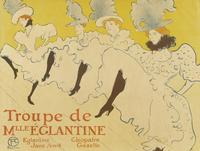
Troupe de Mlle Elegantine (affiche)
Henri de Toulouse-Lautrec
Fashion Illustration
Carlos Saenz de Tejada
Muguette
Theophile Steinlen
Coiffing
Aubrey Beardsley
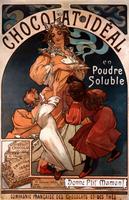
Chocolat Ideal
Alphonse Mucha
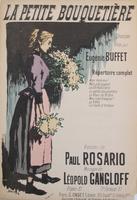
La Petite Bouquetiere
Theophile Steinlen
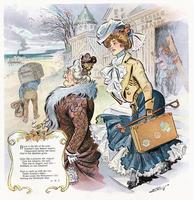
Shifting their camp
Samuel Ehrhart
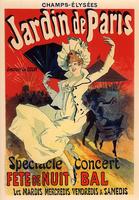
Jardin de Paris, Fête de Nuit Bal
Jules Cheret
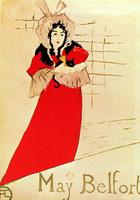
Jardin de Paris, May Belfort, Plakat
Henri de Toulouse-Lautrec
A La Trinite
Theophile Steinlen
Le Punch de Grassot
Jules Cheret
A La Goutte d'Or -1886
Theophile Steinlen
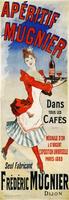
Aperitif Mugnier, Dijon
Jules Cheret