
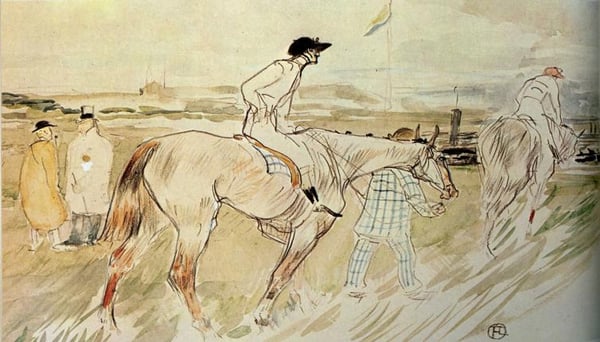
Henri de Toulouse-Lautrec sanatçısının Is it Enough to Want Something Passionately ( The Good Jockey ) eseri hakkında uzman analizi
Tarz: Art Nouveau (Modern) · Tür: genre painting
Expert Analysis: "Is it Enough to Want Something Passionately (The Good Jockey)" by Henri de Toulouse-Lautrec
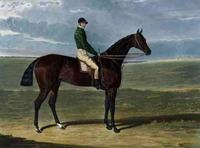
This work stands as a compelling intersection of Art Nouveau’s decorative elegance and the gritty, modern realism of late 19th-century Paris. Toulouse-Lautrec, a master of capturing fleeting moments of urban life, here turns his lens to the racetrack—a subject that, while less famous than his Montmartre cabaret scenes, is equally revealing of his era’s obsession with speed, spectacle, and desire.
Significance within Art Nouveau and Modernism:
Toulouse-Lautrec helped define the visual language of Art Nouveau by flattening space, using sinuous contours, and employing bold, asymmetric compositions derived from Japanese ukiyo-e prints. In this painting, the horse and jockey are rendered with swift, calligraphic strokes that emphasize movement over anatomical detail—a technique that would influence both poster art and early modern painting. The title itself, Is it Enough to Want Something Passionately, adds a philosophical dimension: the jockey’s longing for victory becomes a metaphor for the modern condition, questioning whether pure desire can achieve fulfillment in a world of spectacle and competition.
Genre and Context:
As a genre painting, it elevates a commonplace sporting event into a meditation on ambition and effort. The jockey, reduced to a silhouette of concentrated energy, is not a specific portrait but an archetype of the modern individual—driven, isolated, and dissolving into the background of his own obsession. The palette, dominated by earthy greens and muted reds, reflects the artist’s characteristic use of color to convey mood rather than naturalism, aligning with the Symbolist undercurrents of the period.
Legacy:
This painting exemplifies how Toulouse-Lautrec merged high-art composition with commercial aesthetics, paving the way for later modernist movements. Its raw, unromanticized view of the racetrack—and the existential question posed by its title—reminds us that Art Nouveau was not merely ornamental but deeply engaged with the psychological tensions of modern life.
Görsel olarak benzer
İlişkili kompozisyon ve renk paletine sahip 20 eser
Lottery, Longwaist, Cedric and Figaro All with Jockey up
John Frederick Herring Sr.
Dangerous, Winner of the 1833 Epsom Derby
John Frederick Herring Sr.
Jockeys in the Rain
Edgar Degas
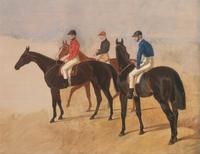
Steeplechase cracks- Allen McDonough on Brunette, Tom Oliver on Discount, and Jem Mason on Lottery
John Frederick Herring Sr.
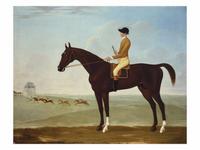
Chesnut Racehorse with Jockey up on Newmarket Heath 18th Century
Byam Shaw
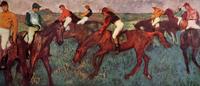
Jokeys Training
Edgar Degas
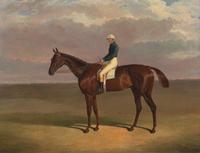
'Margrave' with James Robinson Up
John Frederick Herring Sr.
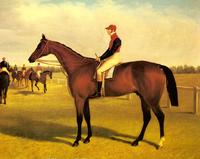
Don John, the Winner of the 1838 St. Leger with William Scott Up
John Frederick Herring Sr.
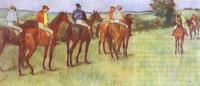
Jockeys
Edgar Degas
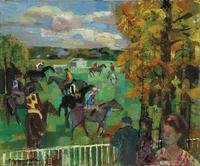
Courses a Saint Cloud
Emilio Grau Sala
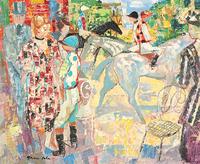
Paddock en Normandie
Emilio Grau Sala
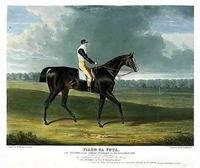
'Filho da Puta', the Winner of the Great St. Leger at Doncaster
John Frederick Herring Sr.
Horse Market
August Macke
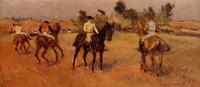
Four Jockeys
Edgar Degas
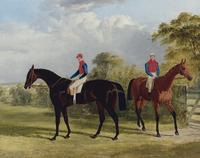
The Earl of Chesterfield's Industry with W Scott up and Caroline Elvina with J Holmes up in a paddock
John Frederick Herring Sr.
Queen of Trumps
John Frederick Herring Sr.
Before the Race
Edgar Degas
Launcelot, Winner of the Great St Leger Stakes at Doncaster
John Frederick Herring Sr.
Horses and Jockeys
Edgar Degas
Priam, Winner of 1830 Epsom Derby
John Frederick Herring Sr.