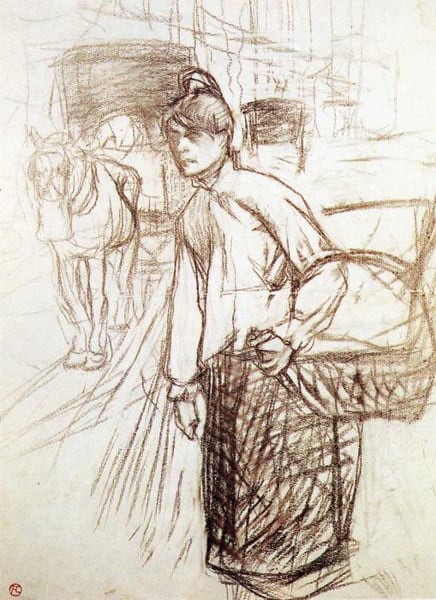
Expert Analysis: "Study for the Laundress" by Henri de Toulouse-Lautrec
As a Post-Impressionist sketch and study, this work holds significance precisely because it reveals the raw, exploratory process behind one of Toulouse-Lautrec’s most iconic subjects. Rather than a polished final composition, the artist uses the study to distill the monumental weight of labor into immediate, expressive lines.
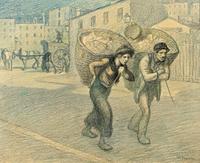
Within the Post-Impressionist context, Toulouse-Lautrec breaks from both naturalism and Impressionist spontaneity. The sketch likely emphasizes contour, flattening space, and a vivid economy of gesture—hallmarks of his style that would later influence modern graphic art. The laundress, a common figure in his oeuvre, is not romanticized; instead, the study captures her physical strain and quiet dignity, aligning with the period’s focus on authentic, modern life.
What makes this sketch and study significant is its rawness. It offers a window into Toulouse-Lautrec’s method: how he built dynamic compositions from simple, searching marks. In an era when finished paintings often dominated, this preparatory work underscores Post-Impressionism’s embrace of individual vision over academic finish, making it a crucial document of both the artist’s hand and the movement’s evolving priorities.