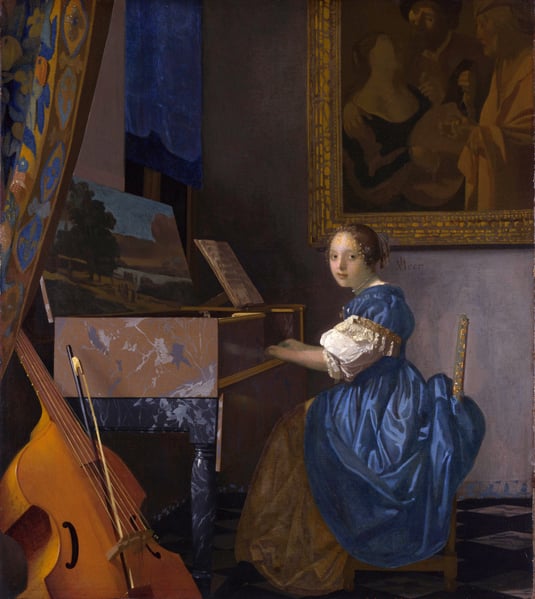
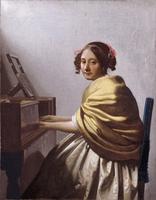
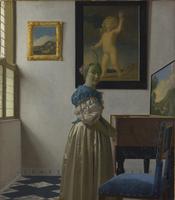
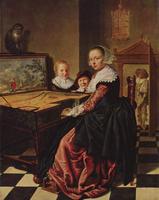
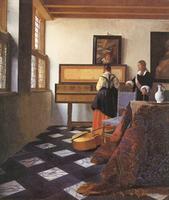
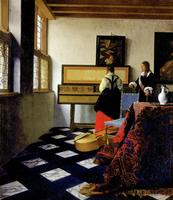
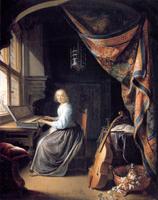
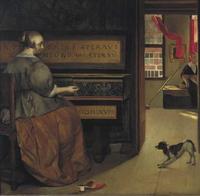
Johannes Vermeer’s A Young Woman Seated at a Virginal (c. 1670–72) is a masterful example of Dutch Baroque genre painting, encapsulating the period’s fascination with private, domestic life while elevating the everyday through extraordinary technical precision. The work’s significance lies in Vermeer’s unparalleled treatment of light and space: the cool, silvery illumination filtering through the leaded window models the young woman’s features and the virginal’s polished wood with a near-photographic realism, while the subtly tilted perspective draws the viewer into an intimate, almost sacramental moment. Beyond its surface calm, the painting is rich with emblematic meaning – the virginal itself, a keyboard instrument often associated with harmony and courtship, and the presence of a viola da gamba (or similar bass instrument) in the background, hint at a dialogue between music and love, or perhaps the fleeting nature of harmony. Vermeer’s meticulous attention to textures – from the satin of her yellow jacket to the marble floor – and his use of a confined, shallow space to concentrate attention, make this a quintessential work of the Delft school. Its significance also lies in how it balances the Baroque love for drama with a serene, contemplative stillness, offering a window into 17th-century Dutch bourgeois ideals of virtue, refinement, and the quiet pleasures of music.