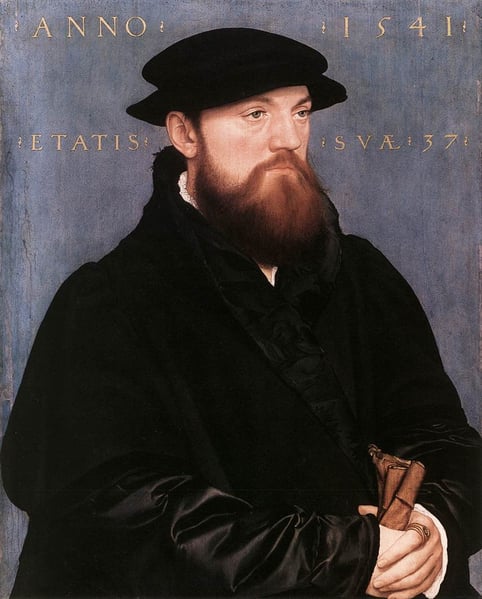
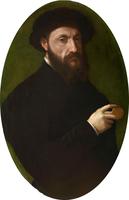
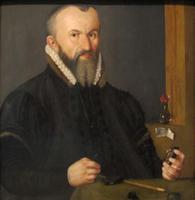
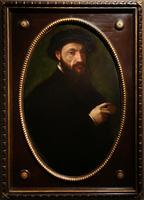
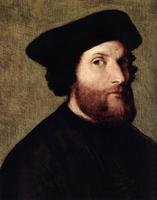
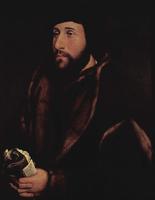
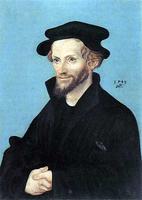
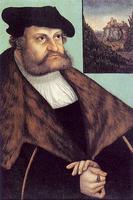
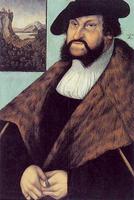
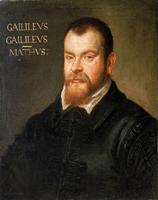
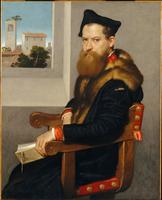
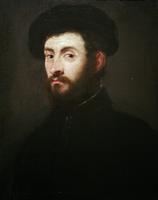
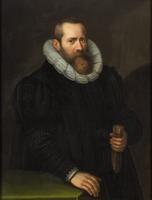
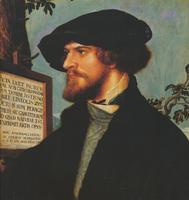
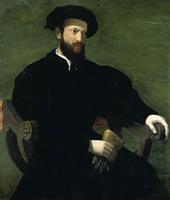
Hans Holbein the Younger’s De Vos Van Steenwijk exemplifies the precision and psychological depth that define Northern Renaissance portraiture. While the structured facts do not include specific visual details, the work’s significance can be assessed through its stylistic and genre context. Holbein’s portraits are renowned for their meticulous realism, achieved through fine brushwork and a mastery of texture—whether rendering fabric, fur, or flesh. In this portrait, the sitter’s identity and status are likely conveyed through symbolic objects or attire, a hallmark of Holbein’s approach that merges individual likeness with broader social meaning. The Northern Renaissance emphasis on empirical observation and detailed surface treatment here serves to capture not just a physical likeness but also the sitter’s character and standing. As a portrait, De Vos Van Steenwijk reflects Holbein’s ability to fuse Netherlandish attention to materiality with a German sensitivity to interiority, making it a significant example of how the genre evolved during this period to balance documentary accuracy with subtle psychological insight.