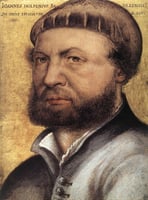
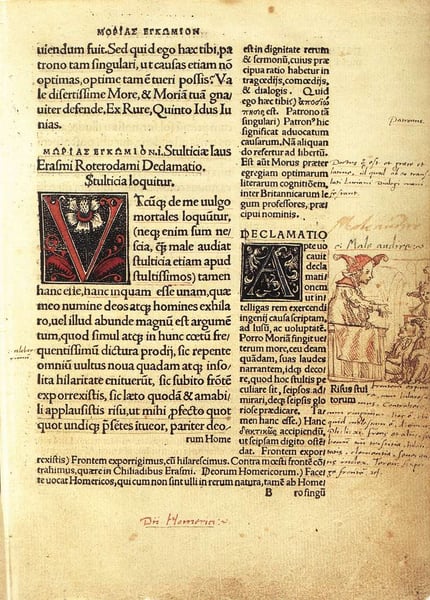
Hans Holbein the Younger sanatçısının Folly at the Lectern eseri hakkında uzman analizi
Tarz: Northern Renaissance · Tür: miniature
As an expert in art history, I will analyze "Folly at the Lectern" by Hans Holbein the Younger based on the provided facts. This work is a miniature within the Northern Renaissance style, and its significance lies in Holbein’s masterful synthesis of intricate detail, intellectual satire, and the emerging humanist critique of his era.
Significance within the Northern Renaissance
1. Exquisite Miniature Technique:
Holbein was one of the foremost miniaturists of the Northern Renaissance, a period that prized meticulous precision and the illusion of reality. In Folly at the Lectern, his use of the miniature scale—often reserved for portrait medals or illuminated manuscripts—demonstrates extraordinary control. Every fold of the fool’s costume, the grain of the wooden lectern, and the subtle play of light on fabric would have been rendered with infinitesimal brushstrokes. This technical virtuosity allowed Holbein to convey complex narratives in a highly portable, intimate format, making the artwork both a collector’s treasure and a vehicle for sharp commentary.
2. Allegorical and Humanist Context:
The title “Folly at the Lectern” directly echoes the themes of Erasmus of Rotterdam’s In Praise of Folly (1509), a seminal humanist text that Holbein famously illustrated. Erasmus personified Folly as a goddess who mocks the pretensions of scholars, clergy, and rulers. Here, the lectern—a symbol of learned authority and religious teaching—is usurped by a figure of folly. This inversion critiques the corruption and empty pedantry Holbein observed in the church and academia. The miniature format amplifies the satire: the viewer must engage closely, as if reading a secret code of intellectual dissent, a hallmark of Northern Renaissance humanism.
3. Symbolic Complexity in a Small Space:
Northern Renaissance miniatures often packed dense symbolism into a confined area. “Folly at the Lectern” would likely include motifs such as a fool’s cap (with bells or ass’s ears), perhaps a book or scroll displaying nonsensical text, and a mock-serious posture that contrasts with the fool’s traditional role as truth-teller. The lectern itself might bear motifs of vanity or decay. Holbein’s ability to compress moral allegory into a tiny composition—without losing clarity or emotional bite—sets this work apart as a pinnacle of the miniature portrait and allegory tradition.
Why It Matters Today
Holbein’s Folly at the Lectern is significant because it bridges two key Renaissance currents: the northern love of empirical detail (seen in the hyper-realistic rendering of texture and light) and the southern humanist fascination with irony and self-knowledge. It elevates the miniature from mere decoration to a powerful vehicle for critique, prefiguring later satirical works by Bruegel and Bosch. For modern viewers, it remains a testament to how even the smallest artworks can contain monumental ideas—a fool at the pulpit, speaking truth to power through laughter.
Museum / Gallery
Görsel olarak benzer
İlişkili kompozisyon ve renk paletine sahip 20 eser
Decorated initial "D"
Claricia
Decorated initial "B"
Claricia
Salva me
Claricia
Flight into Egypt
Stefan Lochner
Page from Farnese Hours
Giulio Clovio
"Claricia" swinging on an initial "Q"
Claricia
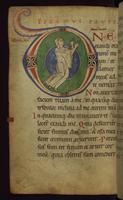
Historiated initial "D" with Orant
Claricia
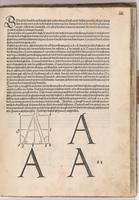
Treatise on Measurement
Albrecht Durer
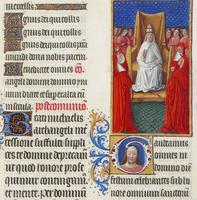
The Pope and His Cardinals
Limbourg brothers
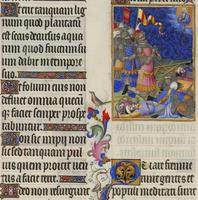
The Messiah Dominions
Limbourg brothers
Prayer of David
Limbourg brothers
David Foresee the Coming of Christ
Limbourg brothers
Saint Matthew
Limbourg brothers
Virgo
Claricia
Sagittarius
Claricia
Psalm XXIV
Limbourg brothers
Pages from Farnese Hours
Giulio Clovio
Job Derided by His Wife
Stefan Lochner
Cancer
Claricia
God Reigns Over All the Earth
Limbourg brothers