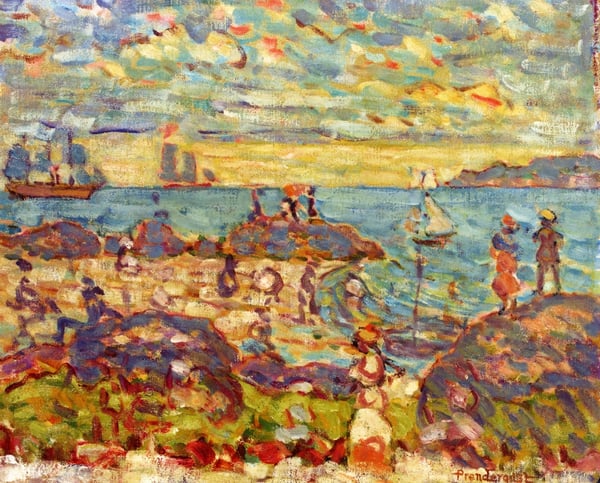
Analisi esperta di The Point, Gloucester di Maurice Prendergast
Stile: Post-Impressionism · Genere: genre painting
Expert Analysis of "The Point, Gloucester" by Maurice Prendergast
Maurice Prendergast’s The Point, Gloucester (ca. 1916) stands as a vibrant exemplar of American Post-Impressionism, distinguished by its radical departure from naturalistic representation in favor of rhythmic pattern and luminous color. As a genre painting depicting everyday life on the Gloucester, Massachusetts waterfront, the work elevates a simple seaside scene into a tapestry of modern visual experience.
Significance within Post-Impressionism:
- Tapestry-like Composition: Prendergast abandons traditional perspective for a flattened, decorative arrangement of figures, boats, and shoreline. This mosaic-like approach, with dabs and dashes of pure color, echoes the pointillist technique of Seurat but is pushed toward a more spontaneous, pattern-driven aesthetic.
- Color as Structure: The artist uses vivid, arbitrary hues—crimson sails, emerald water, ochre sands—not to mimic reality but to create emotional intensity. This aligns with Post-Impressionist principles of prioritizing subjective expression over optical verisimilitude.
- Rhythmic Repetition: The procession of strolling figures, bobbing skiffs, and white tents forms a syncopated rhythm, reminiscent of music or dance. This evokes the era’s interest in synesthesia and the unification of the arts.
Genre Painting Innovation:
- Prendergast transforms the traditional genre scene—a casual view of people at leisure—into a modernist composition. Unlike earlier genre painters who sought narrative or moralizing content, he focuses purely on visual pleasure: the interplay of sunlight, shadow, and civic sociability. The work captures the “modern Arcadia” of early 20th-century American leisure, yet its formal daring aligns it with European avant-garde trends.
Art-Historical Context:
- Prendergast was a key member of The Eight and later the Ashcan School, but his style uniquely synthesized the bold patterns of Vuillard and Bonnard (Nabis) with the color brilliance of Fauvism and Cézanne’s structural logic. The Point, Gloucester exemplifies American Post-Impressionism’s struggle to balance European influence with a distinctly local—and democratic—subject matter.
Thus, the painting’s significance lies in its bridging of American genre tradition with Post-Impressionist technique, offering a vision of everyday life that is at once accessible and radically abstracted in its celebration of color and pattern.
Museum / Gallery
Visivamente simili
20 opere con composizione e palette affini
St. Malo (also known as Sketch, St. Malo)
Maurice Prendergast
St. Malo
Maurice Prendergast
Figures on the Beach
Maurice Prendergast
Harbor, Afternoon
Maurice Prendergast
Study, St. Malo, No. 12
Maurice Prendergast
The fishing fleet of Veere
Jan Toorop
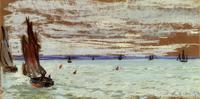
Open Sea
Claude Monet
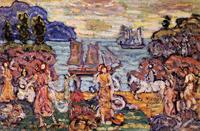
On the Shore
Maurice Prendergast
Sailboats near the coast
Henri Martin
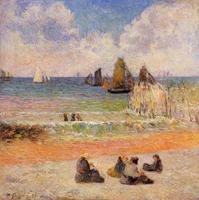
Bathing, Dieppe
Paul Gauguin
Viewing the Sailboat
Maurice Prendergast
Crescent Beach (also known as Crescent Beach, St. Malo)
Maurice Prendergast
The Inlet
Maurice Prendergast
Walberswick. Children Paddling
Philip Wilson Steer
The Coastline at Plougastel
Eugene Boudin
Early Beach
Maurice Prendergast
Late Afternoon, New England
Maurice Prendergast
St. Malo
Maurice Prendergast
The Beach at Petit Dalles (aka On the Beach)
Berthe Morisot
Seascape
Maurice Prendergast