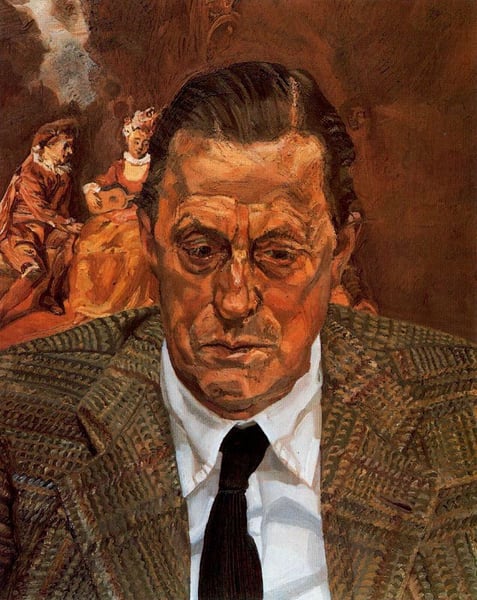
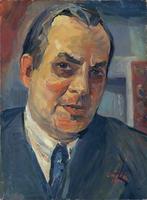
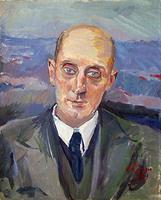
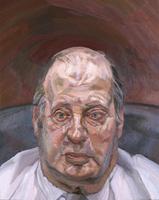
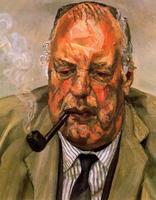
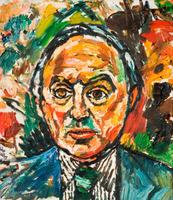
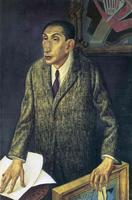
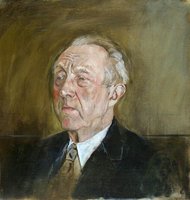
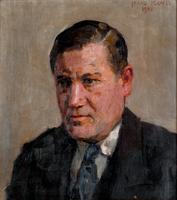
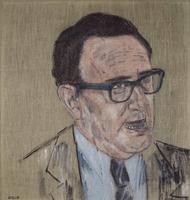
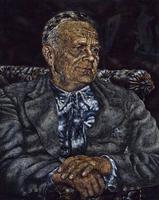
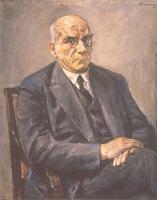
"Head of a Man" by Lucian Freud is a significant work within the Expressionist style and the portrait genre. The painting exemplifies Freud’s intense, psychological approach to portraiture, where the artist’s hallmark use of thick, visceral brushwork and a muted, earthy palette conveys a raw, unflinching sense of human vulnerability. In the context of Expressionism, this portrait moves beyond mere physical likeness to capture an inner emotional state—the sitter’s subtle tension and introspection are made palpable through the distorted yet precise modeling of the face. The work’s significance lies in its ability to merge the expressive exaggeration typical of the movement with a hyper-focus on individual presence, thereby redefining the portrait as a site of psychological excavation. Freud’s treatment of the head as a monumental, almost sculptural mass—its features both tender and unsettling—underscores Expressionism’s enduring aim to reveal the profound complexity of the human condition.