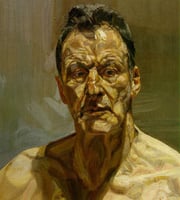
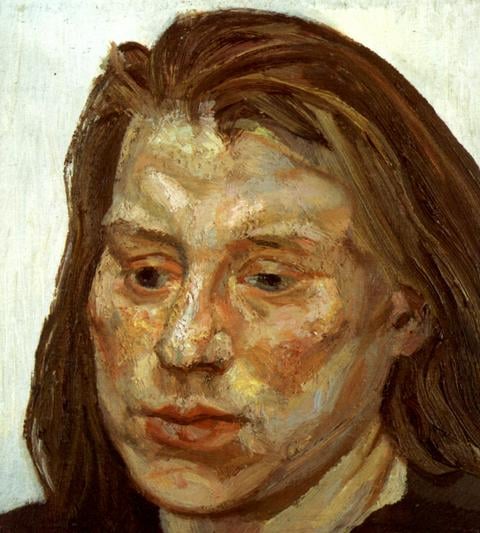
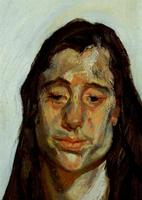
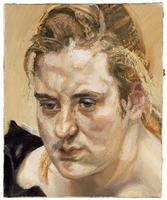
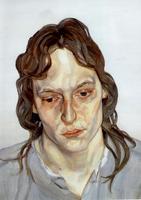
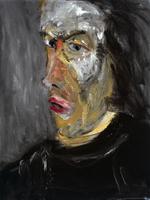
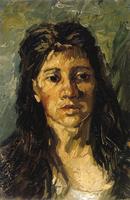
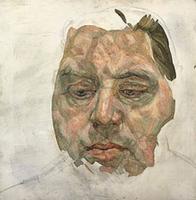
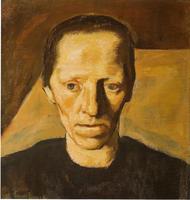
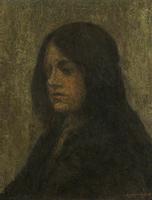
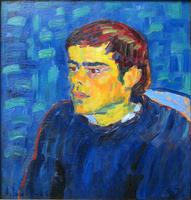
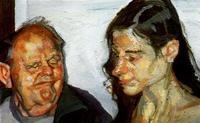
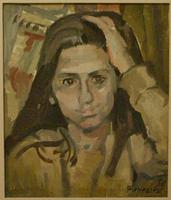
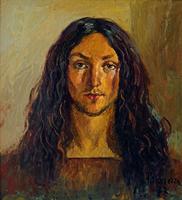
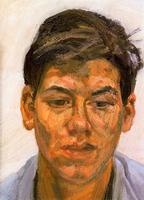
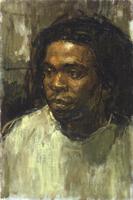
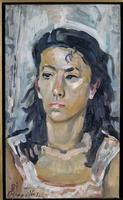
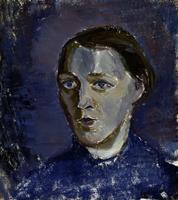
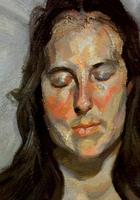
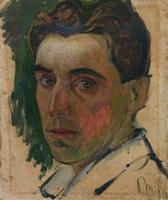
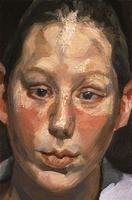
In Lucian Freud’s Portrait of Ib, the work’s significance lies in its fusion of Expressionist intensity with the traditional genre of portraiture. Although Freud is often linked with the School of London and a brutally frank realism, his handling of paint and emotional charge here aligns squarely with Expressionist principles. The sitter is not idealized; instead, Freud’s thick, tactile brushwork (a hallmark of his later style) and his concentrated focus on the physical presence of the subject push beyond likeness into a raw, psychological revelation. The portrait becomes a study of vulnerability and interior life, characteristic of Expressionism’s aim to convey subjective experience. Within Freud’s oeuvre, this work exemplifies how he revitalized portraiture by stripping away sentimentality, using exaggerated texture and a nearly sculptural application of paint to make the surface itself expressive. The significance of Portrait of Ib is thus twofold: it demonstrates the enduring power of Expressionist emotion within a traditional format, and it marks Freud’s contribution to a modern, unflinching humanism in portrait painting.