Expert analysis of Lucian Freud’s Susanna
Style: Expressionism · Genre: portrait
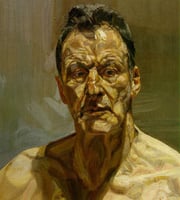
Lucian Freud’s Susanna is a commanding example of Expressionist portraiture that transforms the traditional genre into a raw psychological study. Working within an Expressionist idiom, Freud eschews idealized beauty in favor of an unflinching, emotionally charged realism. The work’s significance lies in its ability to use the expressive language of distortion, heavy impasto, and muted, earthy tones to convey the sitter’s interior life rather than mere physical likeness. Here, the portrait is not a window onto a person’s appearance but onto their vulnerability, solitude, and fleshly presence. Freud’s deliberate, aggressive brushwork and unconventional composition heighten a sense of uneasy intimacy, marking Susanna as a milestone in modern portraiture—where the genre is redefined as a vessel for existential and psychological truth, rooted in the turbulent, subjective vision of Expressionism.
Visually similar
20 works with related composition and palette
Hartley & Ginny
Alice Neel
Arlinda Guma
Gazmend Freitag
Head of Women
Bela Czobel
Annabel
Lucian Freud
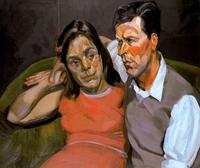
Michael Andrews and June
Lucian Freud
Girl Writing
Lucian Freud
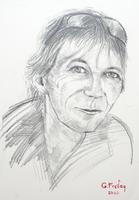
Robert Rieger
Gazmend Freitag
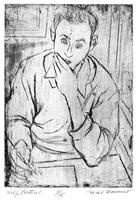
Self-portrait
Will Barnet
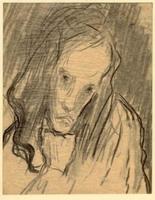
Self-Portrait
Ilka Gedo
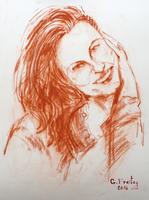
Klara Buda
Gazmend Freitag
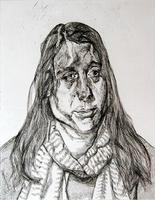
Portrait of a Head
Lucian Freud
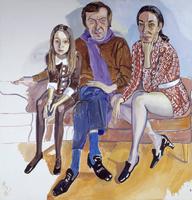
The Family (John Gruen, Jane Wilson and Julia)
Alice Neel
Czobel Bela Women Head
Bela Czobel
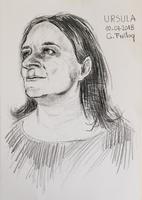
Ursula Roschger
Gazmend Freitag
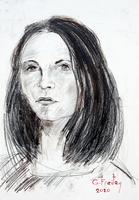
Hava Kurti Krasniqi
Gazmend Freitag
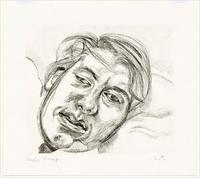
Bella Final Version State II
Lucian Freud
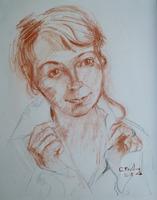
Sandra Oelschläger
Gazmend Freitag
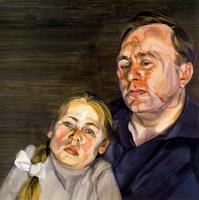
A Man and his Daughter
Lucian Freud
Head of hunchback
Ilya Repin
Head of Ali
Lucian Freud