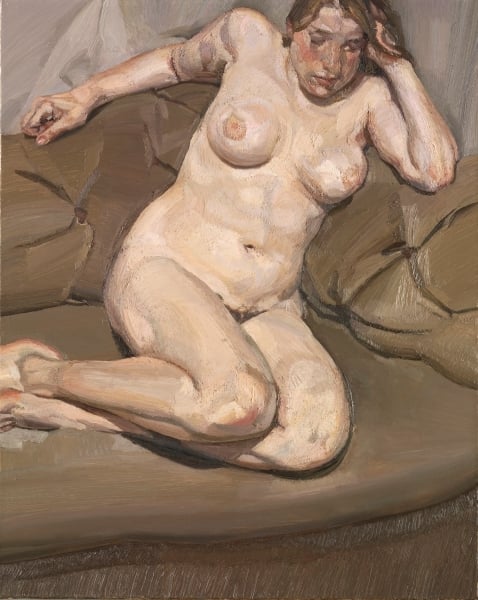
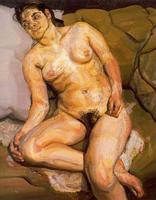
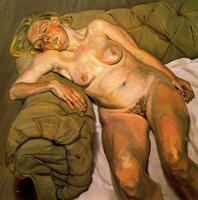
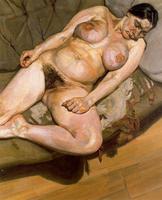
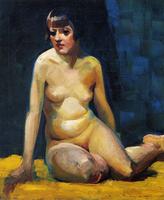
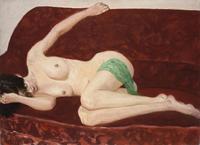
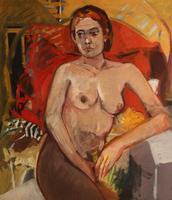
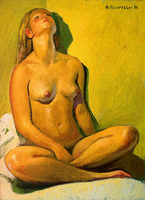
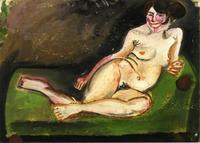
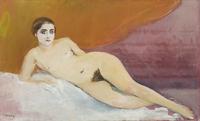
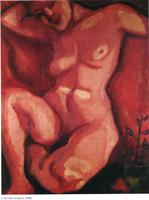
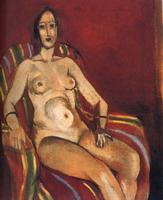
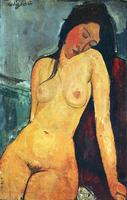
Lucian Freud’s "The Painter’s Daughter Ib" stands as a powerful testament to his uncompromising Expressionist approach to the human figure. Executed in the nude painting genre, the work captures the artist’s own daughter with a raw, psychological intensity that defines Freud’s mature style. Rather than idealizing the subject, Freud’s thick, fleshy impasto and close, almost claustrophobic composition emphasize the physicality and vulnerability of the body—a hallmark of Expressionism’s focus on emotional truth over idealized beauty. The significance here lies in the intimate, personal nature of the sitter: by turning the unsparing gaze of the Expressionist onto a family member, Freud blurs the boundaries between detached observation and deep personal connection, making the painting both a study of flesh and a nuanced portrait of familial trust. In the context of 20th-century nude painting, this work reasserts the genre’s capacity for visceral, psychological impact, rejecting academic polish in favor of a gritty, lived-in realism that resonates with the raw honesty of the Expressionist tradition.