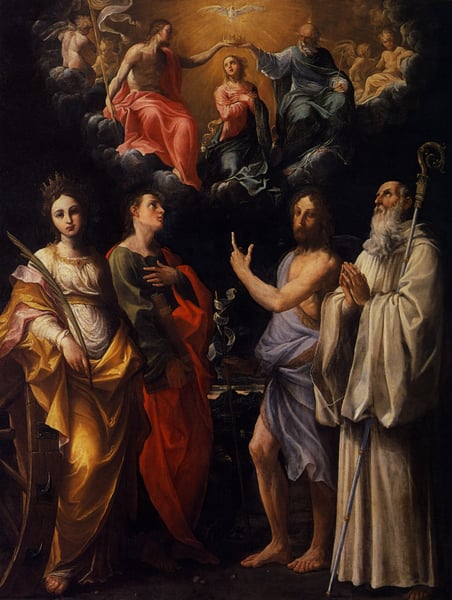
Expert Analysis: "Coronation of the Virgin with St. Catherine of Alexandria, St. John the Evangelist, St. John the Baptist" by Guido Reni
Baroque religious painting
Guido Reni’s monumental altarpiece stands as a masterful synthesis of Baroque devotional intensity and classical clarity. Reni, a leading figure of the Bolognese School, was celebrated for his ability to infuse Counter-Reformation religious narratives with a serene, idealized grace—a hallmark that sets his work apart from the more dramatic, tenebrist tendencies of contemporaries like Caravaggio.
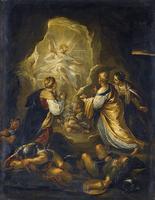
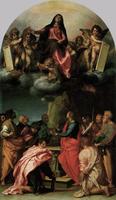
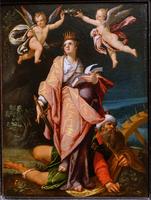
The composition, a celestial hierarchy of figures arranged around the Virgin’s coronation, exemplifies the Baroque interest in unifying earth and heaven through dynamic yet balanced gestures. Reni’s signature sfumato and soft chiaroscuro model the bodies with a luminous, almost porcelain delicacy, while the warm palette and flowing drapery evoke a sense of divine harmony. The inclusion of St. Catherine (with her wheel), St. John the Evangelist (with his eagle or book), and St. John the Baptist (with his traditional reed cross) roots the scene in recognizable hagiographic symbols, making the celestial event accessible to the faithful.
What makes this work significant within the Baroque period is Reni’s deliberate restraint: rather than overwhelming the viewer with ecstatic movement or stark shadows, he channels spiritual exaltation through balanced compositions and refined emotion. This “classicizing” Baroque style—often termed ideal beauty—influenced later generations and represents a quieter yet equally powerful current of 17th-century religious painting.