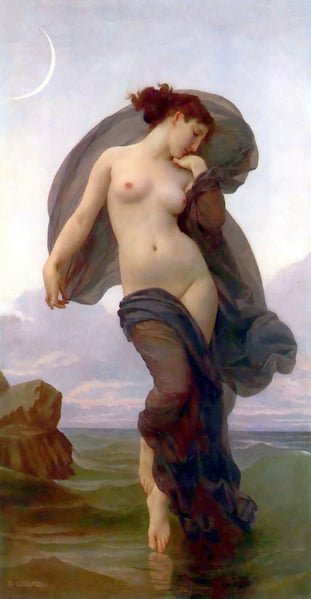
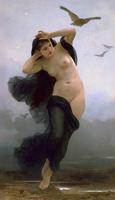
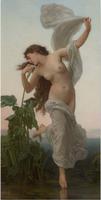
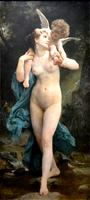
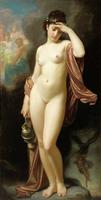
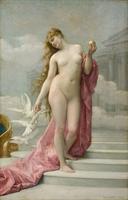
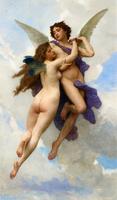
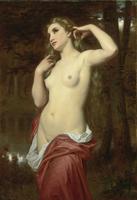
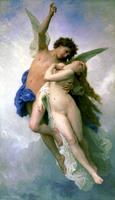
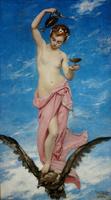
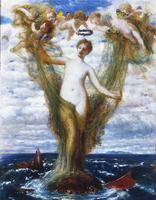
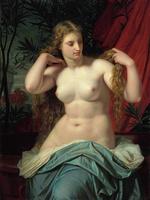
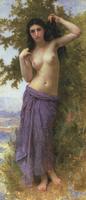
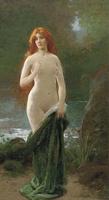
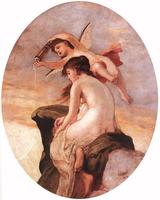
The painting Twilight or Dusk or Evening Mood by William-Adolphe Bouguereau is a significant work within Academicism, the prevailing 19th-century French art movement that prized technical perfection, idealized beauty, and narrative clarity. As an allegorical painting, it transforms a temporal moment—the transition from day to night—into a timeless, humanized figure or scene. Bouguereau’s hallmark smooth brushwork, balanced composition, and luminous, almost porcelain finish elevate the everyday mood of dusk into a poetic, universal symbol of repose and contemplation. This work exemplifies how Academic artists used allegory to marry classical ideals with accessible emotional resonance, reinforcing the movement’s commitment to moral and aesthetic uplift. Its significance lies in its flawless embodiment of Academic principles: a serene, idealized form serves as a vehicle for an intangible concept, proving Bouguereau’s mastery of merging allegorical meaning with exquisite, polished execution.