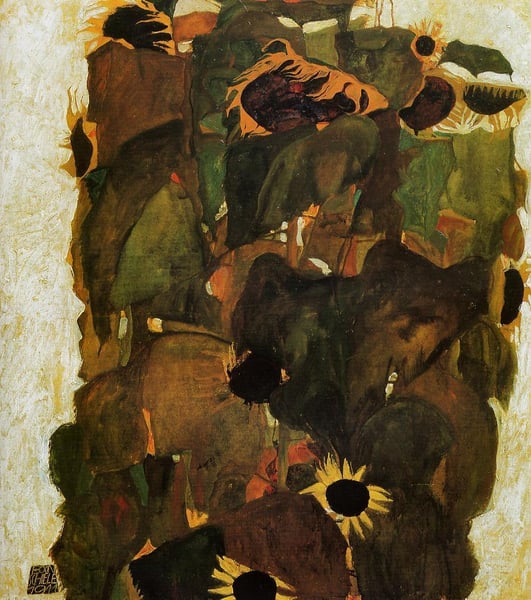
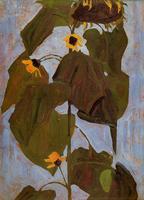
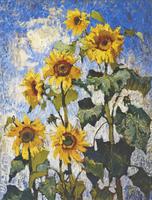
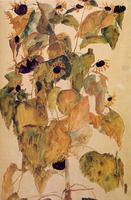
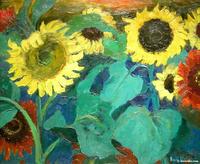
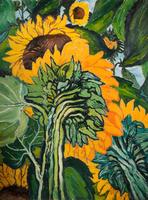
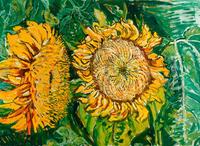
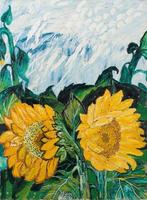
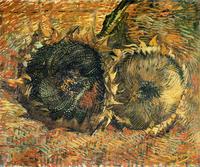
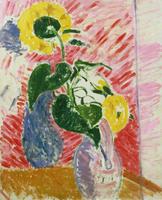
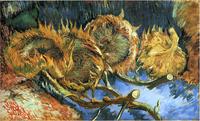
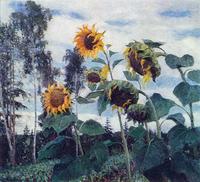
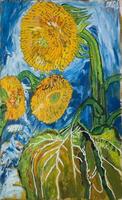
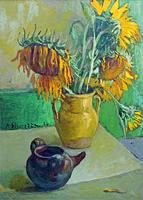
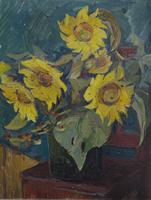
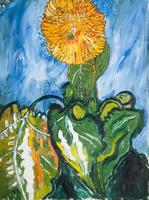
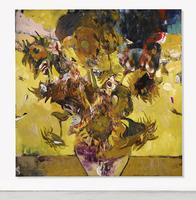
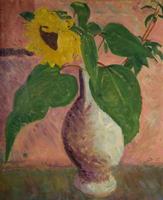
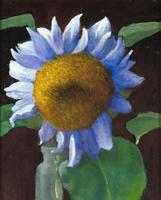
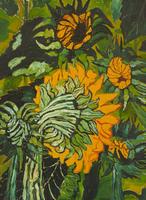
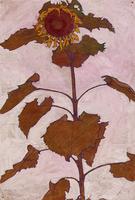
In Egon Schiele's Sunflowers, the artist channels the core tenets of Expressionism to transform a traditional landscape genre into a raw, emotional statement. Unlike the vibrant, life-affirming sunflowers of earlier masters, Schiele’s rendering is marked by his signature contorted lines and a somber, earthy palette. The flowers appear almost skeletal, with drooping heads and withered petals that evoke decay rather than vitality. This deliberate distortion—turning a natural subject into a symbol of fragility and mortality—highlights Schiele’s departure from naturalistic representation. The work is significant within Expressionism for how it uses aggressive, angular strokes and a claustrophobic composition to externalize inner psychological turmoil. By imbuing a simple landscape motif with existential dread, Schiele pushes the boundaries of the genre, proving that even the most familiar subject can become a vehicle for intense, subjective experience—a hallmark of the movement’s revolutionary spirit.