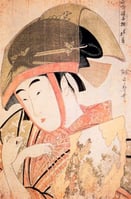
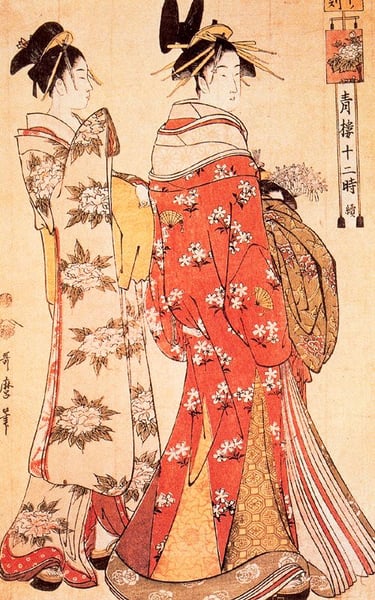
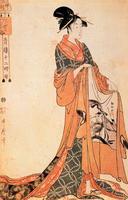
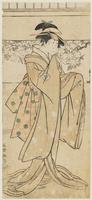
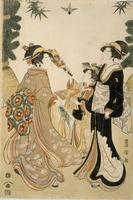
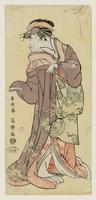
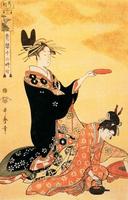
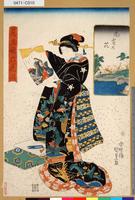
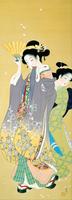
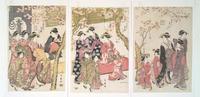
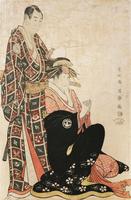
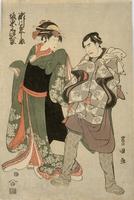
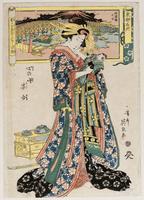
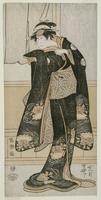
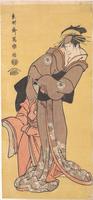
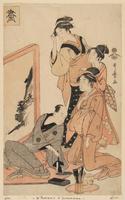
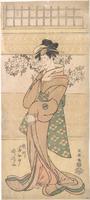
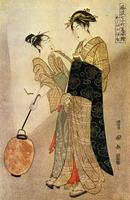
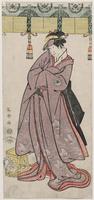
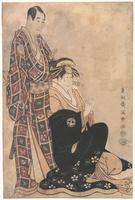
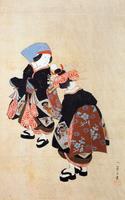
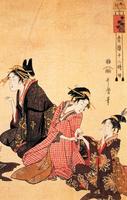
This illustration from Kitagawa Utamaro’s series The Twelve Hours of the Green Houses (c. 1795) is a quintessential example of the Ukiyo-e style, specifically the bijin-ga (pictures of beautiful women) subgenre that flourished in the late Edo period. Its significance lies in how Utamaro elevates a routine genre illustration—a snapshot of a courtesan’s daily life within the licensed pleasure quarters (the “green houses”)—into a nuanced study of intimacy, fashion, and the passing of time. The series title itself innovatively structures the work around the twelve traditional Japanese hours, linking the ephemeral moments of courtesan existence to a cyclical, almost clockwork rhythm. As a color woodblock print, this piece demonstrates Utamaro’s mastery of subtle tonal gradations and elegant linework, capturing both the decorative richness of the women’s kimono and the psychological depth of their expressions. Within the Ukiyo-e period, Utamaro’s illustrations were prized for their humanizing portrayal of subjects often reduced to mere symbols of pleasure, making this print a key document of the era’s aesthetic and social preoccupations.