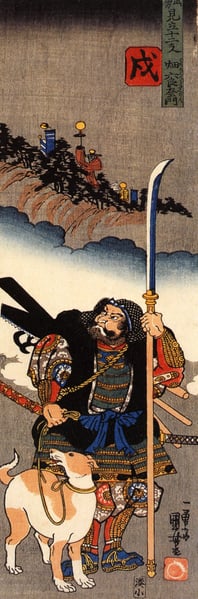
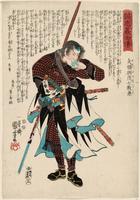
Hata Rokurozaemon with his dog
Utagawa Kuniyoshi sanatçısının Hata Rokurozaemon with his dog eseri hakkında uzman analizi
Tarz: Ukiyo-e · Tür: portrait
The portrait of Hata Rokurozaemon with his dog, by Utagawa Kuniyoshi, is a striking example of the ukiyo-e genre of musha-e (warrior prints), which Kuniyoshi helped redefine. While the standard ukiyo-e portrait focused on actors or courtesans, Kuniyoshi specialized in historical and legendary heroes, infusing them with dramatic dynamism and psychological depth.
Significance within ukiyo-e and its period:
-
Elevation of the warrior portrait: In an era when most ukiyo-e portraiture centered on the yakusha-e (actor prints) of the Kabuki stage, Kuniyoshi brought military and mythological figures to the forefront. Here, Hata Rokurozaemon is depicted not merely as a stoic samurai but as a complex individual, with his loyal dog reinforcing themes of fidelity and martial virtue. This aligns with the Tokugawa shogunate’s promotion of bushido, yet Kuniyoshi often subtly subverted authority in his work.
-
Dynamic composition and Western influence: Kuniyoshi was among the first ukiyo-e artists to absorb Western linear perspective and chiaroscuro, visible in the sculptural modeling of the dog’s fur and the dramatic tension in the man’s posture. The cropped, close-up view and diagonal thrust of the figures create an almost cinematic immediacy, prefiguring the kabuki-mono (extravagant) style that influenced later Japanese manga and European Japonisme.
-
Symbolic pairing: The dog (often associated with loyalty and protection) was a recurring motif in Kuniyoshi’s warrior prints, serving as an emblem of the samurai’s virtues. This combination of human and animal portraits was rare in ukiyo-e tradition, marking Kuniyoshi’s innovation in mixing genres.
-
Technical mastery: Notice the bold bokashi (gradation) in the dog’s coat, the intricate linework of the armor details, and the restrained palette that directs focus to the subject’s intense gaze—hallmarks of Kuniyoshi’s mature style that pushed ukiyo-e beyond flat decoration into expressive portraiture.
In sum, this work exemplifies Kuniyoshi’s transformative role in ukiyo-e: he took the conventional portrait and turned it into a narrative of character, earning him a place as one of the last great masters of the floating world.
Görsel olarak benzer
İlişkili kompozisyon ve renk paletine sahip 20 eser
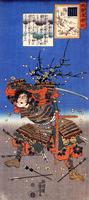
Kajiwara Genda Kagesue for Umegae
Utagawa Kuniyoshi
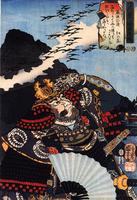
Homing geese at the Northern capital
Utagawa Kuniyoshi
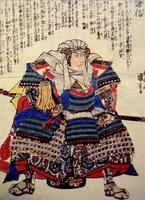
A fierce depiction of Uesugi Kenshin seated
Utagawa Kuniyoshi
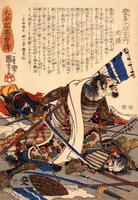
Toki Jurozaemon Mitsuchika
Utagawa Kuniyoshi
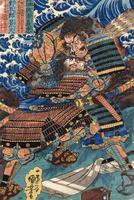
Design the Struggle
Utagawa Kuniyoshi
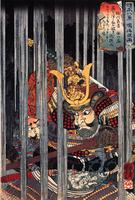
Night rain at Narumi
Utagawa Kuniyoshi
Taira
Tsukioka Yoshitoshi
Soga Gorō and Gosho Gorōmaru
Tōshūsai Sharaku
Kagehisa and Yoshitada wrestling
Utagawa Kuniyoshi
Tiger
Utagawa Kuniyoshi
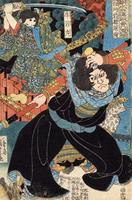
Eight Hundred Heroes of Our Country
Utagawa Kuniyoshi
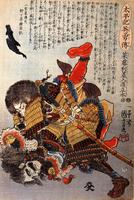
Saito Toshimoto and a warrior in a underwater struggle
Utagawa Kuniyoshi
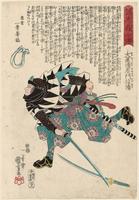
Ôboshi Seizaemon Nobukiyo
Utagawa Kuniyoshi
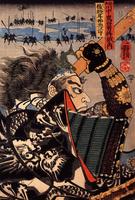
Amakasu Omi no Kami
Utagawa Kuniyoshi
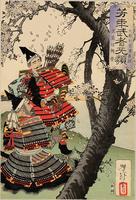
Yoshitsune with benkei
Tsukioka Yoshitoshi
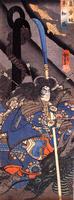
Taira Tomomori and a sea dragon
Utagawa Kuniyoshi
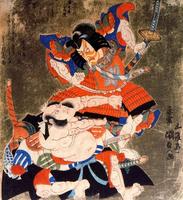
Ichikawa Danjuro VII and Bando Mitsugoro III as Soga no Goro and Asaina no Saburo
Utagawa Kunisada
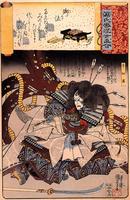
Minori - The mortally wounded Taira Tomomori with ahuge anchor
Utagawa Kuniyoshi
Yatô Yomoshichi Norikane
Utagawa Kuniyoshi
The death of Nitta Yoshioki at the Yaguchi ferry
Utagawa Kuniyoshi