Analisi esperta di Illustration to "A Week of Kindness" di Max Ernst
Stile: Surrealism · Genere: illustration
Expert Analysis: Max Ernst’s Illustration to "A Week of Kindness" (c. 1934)
Significance within Surrealism
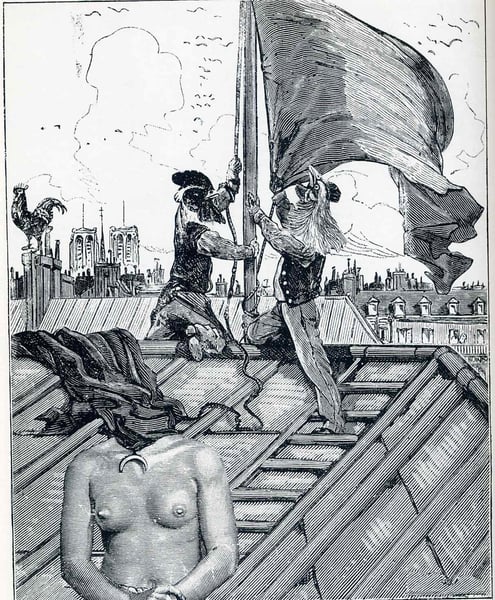
This work is a quintessential example of Max Ernst’s collage-novel technique, a groundbreaking method that defines his contribution to Surrealism. Created during Ernst’s First French period (1922–1939), when he was deeply immersed in the Parisian Surrealist circle, the piece is part of his pivotal series Une Semaine de Bonté (A Week of Kindness). Published in 1934, the series consists of five booklets of collages, each illustrating a day of the week—this specific Illustration belongs to the first booklet, “Sunday.”
What Makes It Significant
- Collage as Surrealist Subversion: Ernst did not paint these illustrations; he meticulously cut and recombined Victorian steel engravings from 19th-century novels, scientific textbooks, and catalogues. By wrenching these banal, naturalistic images from their original contexts and reassembling them into impossible, dreamlike scenes, he enacted the Surrealist principle of “dislocation” to access the unconscious.
- Dream Logic and The Uncanny: The composition marries disparate elements—bird-headed figures, architectural ruins, flowing capes, and enigmatic props—to create a non-linear, oneiric narrative. Ernst’s method transforms the familiar into the unsettling, where ordinary objects (a staircase, a bed, a lion) become charged with erotic, violent, or absurd undertones. This aligns with André Breton’s call to “resolve the contradiction between dream and reality.”
- Narrative Ambiguity: Unlike traditional book illustrations, Ernst’s images resist clear storytelling. The series follows a weekly structure, but the collages offer only fragmented, symbolic episodes. This deliberate anti-narrative challenges the viewer to construct meaning from associative leaps, mirroring the Surrealist fascination with automatism and the irrational.
- Technical Mastery and Scale: Ernst concealed the seams of his collages so skillfully that they appear as seamless, unified scenes—a feat of precision that underscored his belief that the found object could be elevated to high art. The works were reproduced as photogravures, giving them a haunting, sepia-toned uniformity that heightens their eerie, timeless quality.
Legacy
Une Semaine de Bonté is considered one of the defining achievements of Surrealist collage, influencing later artists from Joseph Cornell to contemporary photomontage. Ernst’s Illustration exemplifies how Surrealism could transform the mundane into a personal mythos—a visual exploration of desire, fear, and the subconscious, rendered through the violent union of incompatible realities.
Museum / Gallery
Visivamente simili
20 opere con composizione e palette affini
View of Paris, with the Hôtel de Ville and the Tour-Saint-Jacques
Vincent van Gogh
L'Arc de Triomphe
Theophile Steinlen
Librairie Romantique
Eugène Grasset
View from the Apartment in the Rue Lepic
Vincent van Gogh
La Marseillaise
Theophile Steinlen
Fin de Bai sketch
Theophile Steinlen
Toits De Paris - Tour Eiffel
Ludovic Alleaume
7 rue Campagne-Première, Paris Court
Grace Albee
Fin de bail litho
Theophile Steinlen
Affiche Pour Le Lancement Du Journal La Bataille Syndicaliste En 1911
Maximilien Luce
Gezicht op de stad Parijs gezien vanaf de Quai de Miramion
Jean-Francois Daumont
A View of Paris with the Op
Vincent van Gogh
Fin de Bail
Theophile Steinlen
Villa Amendola
Achille Beltrame
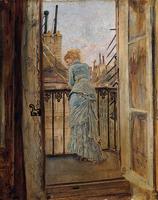
On the balcony
Anton Romako
Modok Mária, Városrészlet 1943
Modok Mária
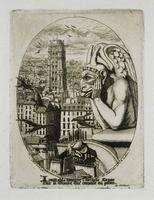
Le Stryge
Charles Meryon
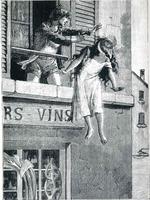
Illustration to "A Week of Kindness"
Max Ernst
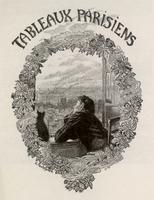
Tableaux Parisiens
Georges Rochegrosse
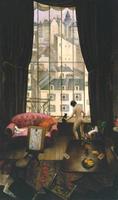
A Studio in Montparnasse
C. R. W. Nevinson