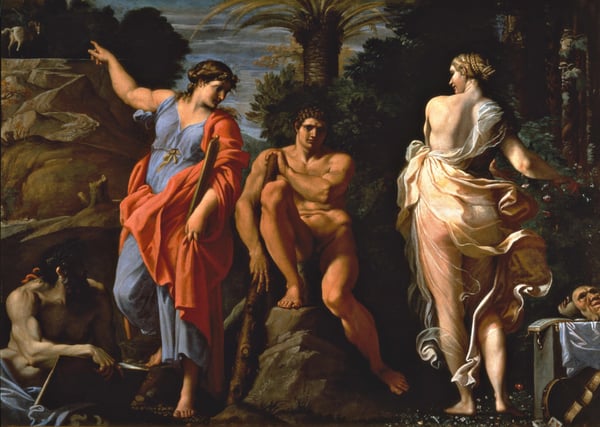
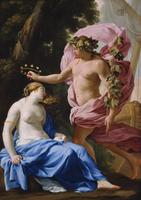
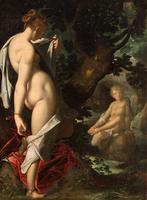
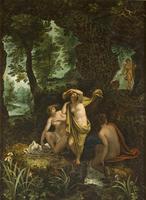
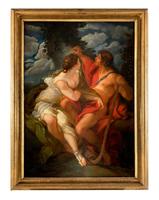
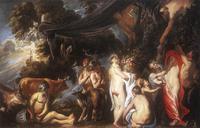
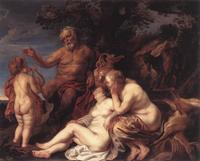
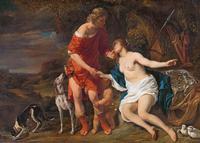
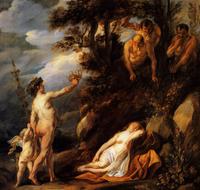
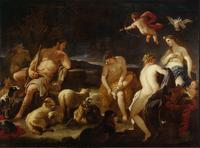
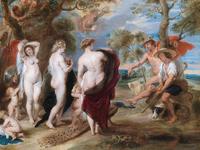
As a Baroque mythological painting, "The Choice of Heracles" by Annibale Carracci exemplifies the period’s emphasis on dramatic moral allegory and dynamic naturalism. The work’s significance lies in its fusion of classical subject matter with Baroque theatricality: the moment of Heracles’ decision between Virtue and Vice is rendered with heightened emotional tension and vivid physicality, characteristic of Carracci’s pioneering approach. This painting is crucial for establishing how Baroque artists revived mythological narratives not as static ideals but as visceral, human-centered dramas—using chiaroscuro, expressive gestures, and a sense of imminent action to engage the viewer’s own moral reflection. In doing so, Carracci bridges Renaissance compositional harmony with Baroque immediacy, making the work a touchstone for the age’s exploration of choice, consequence, and the human condition.