Expertenanalyse zu William Hogarths Before the Seduction and After
Stil: Rococo · Genre: genre painting
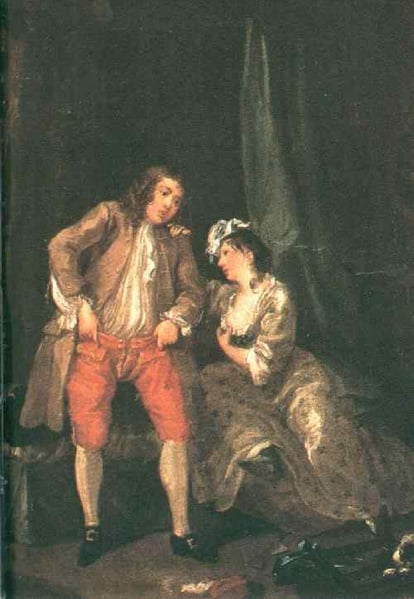
William Hogarth's "Before the Seduction and After" (c. 1731) is a masterful example of Rococo genre painting that subverts the typically lighthearted, decorative tendencies of the style to deliver a sharp moral lesson. Painted as a pair of canvases (often displayed side by side), the work depicts a single seduction narrative in two acts: the flirtatious "before" scene, full of playful tension and elaborate costumes, and the somber "after" scene, where the consequences—remorse, shame, or betrayal—are laid bare.
Significance within the Rococo style and genre painting:
- Subversion of Rococo conventions: While Rococo art in France (Watteau, Boucher) often celebrated aristocratic pleasure, dalliance, and pastoral fantasy, Hogarth appropriates its lush palette, fluid brushwork, and attention to luxurious fabrics (satin, lace) to expose the moral cost of such frivolity. The playful, erotic tension of the "before" panel is a direct, critical mirror of Rococo gallantry, while the "after" panel replaces elegance with disorder, abandoned clothing, and a woman's despair.
- Narrative innovation in genre painting: Hogarth elevates genre painting from simple scenes of daily life to a sequential, storytelling medium—a "modern moral subject." By presenting two contrasting moments side by side, he creates a before-and-after structure that forces the viewer to contemplate cause and effect. This narrative device became a hallmark of Hogarth's later series (e.g., A Harlot's Progress) and influenced the development of serial narrative art.
- Moralizing social commentary: Unlike the aristocratic patrons of French Rococo, Hogarth's audience was the English middle class. His genre scenes are didactic, warning against the perils of seduction, loose morals, and the abuse of power. The pairing of seduction and its aftermath turns a private drama into a public lesson, reinforcing the idea that Rococo elegance can mask moral decay.
Thus, "Before the Seduction and After" is significant not only as a technical display of Rococo painterly skill but as a pioneering critique of the very society that embraced that style. It marks a turning point where genre painting became a vehicle for narrative complexity and ethical reflection.
Museum / Gallery
Visuell ähnlich
20 Werke mit ähnlicher Komposition und Farbpalette
Family Portrait of Baron von Erlach
Antoine Pesne
The Theft of a Watch
William Hogarth
A Party of Merrymakers
Pieter Jansz. Quast
The beginnings of model
Jean-Honore Fragonard
Francis I and the Duchess of Etampes
Richard Parkes Bonington
Happy Pierrot
Antoine Watteau
Mr. Robert Grafton and Mrs. Mary Partridge Wells Grafton
Benjamin West
Columbus and Isabella
Anton Romako
The Huntsman and the Lady
Gabriel Metsu
La visita
Bengt Nordenberg
The Family
Pietro Longhi
The Western Family
William Hogarth
The Geography Lesson
Pietro Longhi
Sir Watkin Williams-Wynn and his Mother
Joshua Reynolds
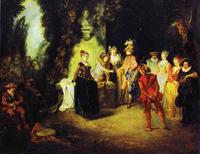
Love in the French Theater
Antoine Watteau
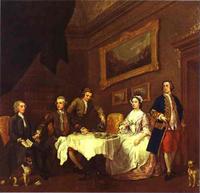
The Strode Family
William Hogarth
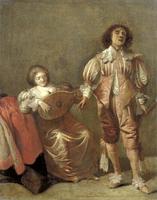
Quast Concert
Pieter Jansz. Quast
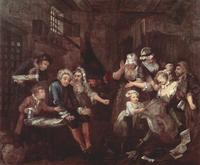
The prison
William Hogarth
James Sinclair-Erskine (1762–1837), Later 2nd Earl of Rosslyn, His Brother John and His Sister Henrietta Maria
Nathaniel Hone the Elder
Portrait of the crown prince Friedrich Ludwig of Württemberg and his wife Henriette Marie of Brandenburg Schwedt
Antoine Pesne