Экспертный разбор работы «Columbus Breaking the Egg (Christopher Columbus)» художника William Hogarth
Стиль: Rococo · Жанр: allegorical painting
Expert Analysis: Columbus Breaking the Egg (Christopher Columbus) by William Hogarth
Style & Period Context
Although classified as Rococo in style, Hogarth’s work is a distinctly British adaptation of that aesthetic. While French Rococo often celebrates leisurely frivolity and decorative sensuality, Hogarth channels the movement’s love for dynamic composition, sinuous lines, and elegant gestures into a morally charged narrative. Here, the playful egg-breaking scene unfolds with theatrical clarity—the figures’ poses are exaggerated for legibility, and the palette is earthy yet vibrant, typical of Hogarth’s print-influenced style.
Allegorical Genre and Subject
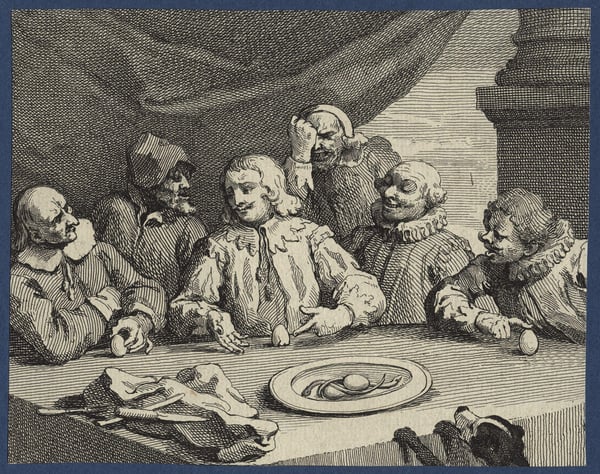
The painting illustrates the famous anecdote (popularized by Vasari via Girolamo Benzoni) in which Columbus, challenged by Spanish courtiers who claimed his voyage was too easy to be remarkable, challenges them to make an egg stand on its end. After they fail, he gently taps the end to flatten it, making the egg stand—demonstrating that a breakthrough seems obvious only after the fact. Hogarth transforms this historical myth into an allegory of creative genius and the blind disregard faced by innovators.
Significance
-
Defense of Originality: Hogarth himself faced criticism as a self-taught artist challenging academic conventions. By painting Columbus—the archetypal outsider who “discovered” a new world—Hogarth aligns his own artistic innovations (such as his serial moral narratives) with this moment of paradigm shift. The egg becomes a metaphor for the “simple” yet revolutionary act of breaking tradition.
-
Narrative Economy: True to Hogarth’s genius for storytelling, every character expresses a distinct mental state: Columbus’s calm confidence, the courtiers’ dawning chagrin, and the amusement of a few onlookers. The broken egg on the table literally centers the viewer’s attention, grounding the allegory in a physical act that anyone can understand.
-
Rococo Satire: Unlike frivolous Rococo pastorals, Hogarth uses the style’s graceful lines and soft light to expose human folly. The elegant tablecloth, fine garments, and polite setting contrast sharply with the intellectual humiliation of the nobles—a subtle critique of arrogance disguised as refinement.
-
Enduring Impact: This painting (and its popular engraved version) helped cement the egg-breaking story in Western cultural memory as shorthand for “why didn’t I think of that?” It remains a touchstone for debates about the nature of invention, the role of the amateur, and the resistance to new ideas—themes as relevant today as in the 18th century.
Conclusion
Hogarth’s Columbus Breaking the Egg is a quintessentially Enlightenment work: it uses a light, Rococo touch to deliver a weighty lesson about genius, perception, and the value of doing what seems impossible until it is done. Its significance lies in how a simple, almost comedic gesture becomes a profound allegory for artistic and intellectual courage.
Визуально похожие
20 работ с близкой композицией и палитрой
Don Quixote
Gustave Dore
A Midnight Modern Conversation
William Hogarth
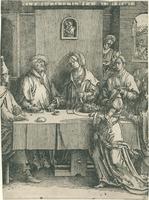
Salome With The Head Of John The Baptist
Lucas van Leyden
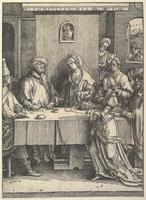
Salome with the Head of John the Baptist
Lucas van Leyden
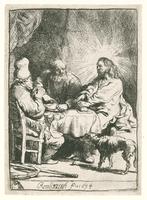
Christ at Emmaus
Rembrandt
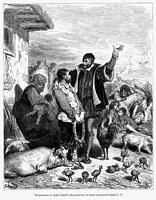
Don Quixote
Gustave Dore
Une Femme occupée à cacheter une lettre
Jean-Baptiste-Simeon Chardin
Don Quixote
Gustave Dore
The pancake woman
Rembrandt
Banquet on a Terrace
Esaias van de Velde
The Drinkers
Adriaen van Ostade
Salome with the Head of John the Baptist
Lucas van Leyden
Jacob Telling his Dreams
Rembrandt
Don Quixote
Gustave Dore
ancho no se deja lavar en casa de los duques, aguafuerte y buril
Pierre Alexander Aveline
How they break her barrel
Francisco Goya
Piramide d'ailes et de cuisses de Poulets
Francois-Bernard Lepicie
Jacques de Caumont
Frederick Sandys
The Laughing Audience (or A Pleased Audience)
William Hogarth
Anne Hutchinson on Trial
Edwin Austin Abbey