Expert analysis of Edward Hopper’s The City
Style: New Realism · Genre: cityscape
Expert Analysis: "The City" by Edward Hopper
Edward Hopper’s The City (1927) stands as a quintessential example of the New Realism movement—often referred to as American Realism—which emerged in the early 20th century as a reaction against abstraction and European modernism. New Realism sought to capture the unembellished, often psychologically charged reality of modern American life, and Hopper was its most celebrated practitioner.
Significance within the New Realism style and cityscape genre:
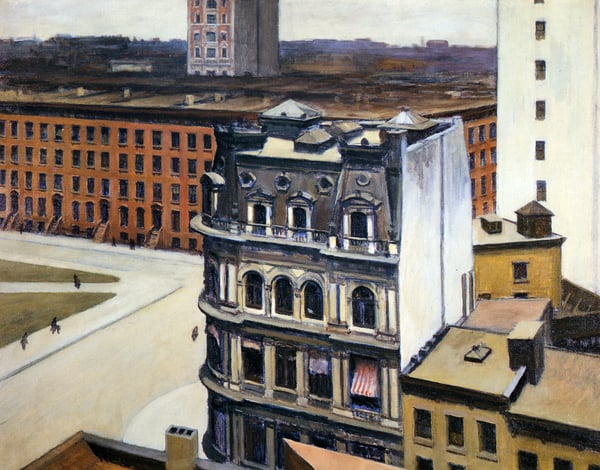
This painting is significant because it transforms a seemingly ordinary cityscape into a profound meditation on urban solitude. Unlike earlier realist city views that celebrated bustling activity or architectural grandeur, Hopper’s scene is eerily quiet. The composition focuses on a row of anonymous brick buildings, a vacant lot, and a single street, with a few isolated figures appearing distant and disconnected. The strong, raking light—a hallmark of Hopper’s technique—creates sharp contrasts of sunlit walls and deep shadows, emphasizing the psychological weight of empty spaces.
What makes The City especially important is how it exemplifies Hopper’s ability to imbue mundane urban scenes with a sense of alienation and stillness. The figures are not interacting; they seem trapped in their own private worlds. This quiet tension is a defining feature of New Realism, which often used realistic depiction to explore the emotional isolation of modern life. The painting’s horizontal format and stark geometries also reflect a subtle influence of photography and film, anticipating the cinematic quality that would later define Hopper’s greatest works.
In short, The City is a masterful expression of New Realism’s core ambition: to use faithful visual observation not to celebrate the city, but to reveal the haunting loneliness beneath its everyday facade. It solidifies Hopper’s role as a chronicler of the American psyche in the machine age.
Museum / Gallery
Visually similar
20 works with related composition and palette
Paysage New Yorkais N°4
Pietropoli Patrick
Cornelia Street
John French Sloan
Brooklyn 10
Pietropoli Patrick
Presentation of Colors
Edward Lamson Henry
The City from Greenwich Village
John French Sloan
The Flag, Fifth Avenue
Childe Hassam
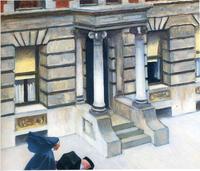
New York Pavements,
Edward Hopper
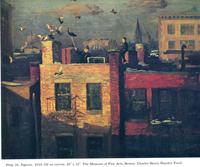
Pigeons
John French Sloan
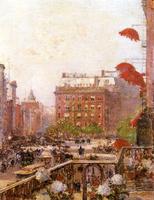
View of Broadway and Fifth Avenue
Childe Hassam
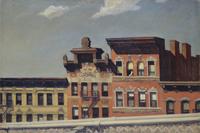
From Williamsburg Bridge
Edward Hopper
Grande Vue De Brooklyn Panoramique 3
Pietropoli Patrick
Brooklyn 5
Pietropoli Patrick
American Village
Edward Hopper
Old Chelsea, New York
Walter Battiss
Meeting At The Commons: Lawrence 1912
Ralph Fasanella
East River from the Thirtieth Story of the Shelton Hotel
Georgia O'Keeffe
The Great Shadow
Martin Lewis
View of City Rooftops in Winter
Robert Julian Onderdonk
View of the World from 9th Avenue
Saul Steinberg
Fire on Twenty-Fourth Street
Everett Shinn