
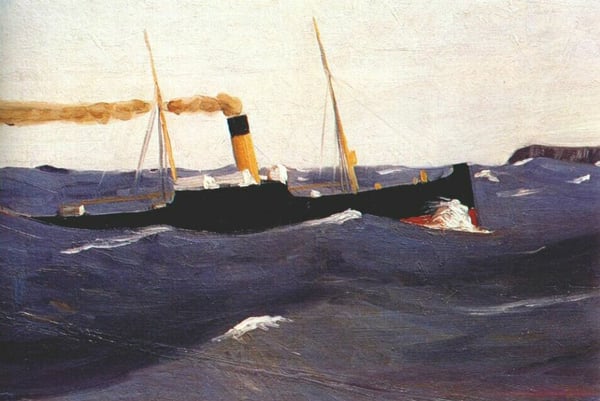
Análisis experto de Tramp Steamer de Edward Hopper
Estilo: New Realism · Género: marina
As a work of New Realism in the marina genre, Edward Hopper's Tramp Steamer draws significance from its refusal of romanticized seascapes. Where traditional marinas might emphasize picturesque harbors or dramatic naval battles, the New Realist approach treats the tramp steamer—a hardworking, utilitarian vessel—as a quiet monument to modern labor and isolation. The painting’s importance lies in how it translates the movement’s core principle of unadorned observation: by focusing on a subject that is neither heroic nor beautiful, Hopper anchors the image in the gritty authenticity of everyday industrial life. The steamer itself becomes a vessel of ambiguity, drifting between the vastness of the sea and the human toil it represents, which is precisely the kind of honest, unsentimental truth that New Realism champions. Within the marina genre, this work redefines the waterfront as a space not of leisure but of stark, quiet endurance.
Visualmente similares
20 obras con composición y paleta relacionadas
William Gray
Edward E. Simmons
The Dutch Steamer Vaderland on a Choppy Sea
Antonio Jacobsen
Imperial yacht ‘POLAR STAR’ of Nicholas II of Russia
Konstantin Kryzhitsky
Yacht
Ioannis Altamouras
View of the Port
Alfredo Andersen
Grey Steam Boat
Alfred Wallis
Parade of the Navy. Imperial yacht Standart.
Ivan Vladimirov
Campania
Antonio Jacobsen
S.S. Oceana
Antonio Jacobsen
A convoy of ships during the First World War with additional support from the air
Daniel Sherrin
The Minnehaha
Antonio Jacobsen
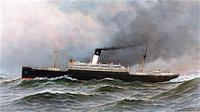
The Momus
Antonio Jacobsen
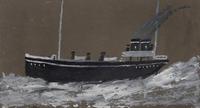
Death Ship
Alfred Wallis
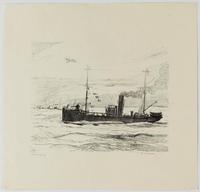
Hmcs Grilse on Convoy Duty
Arthur Lismer
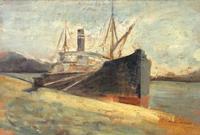
Docked Ship
Nicolae Vermont
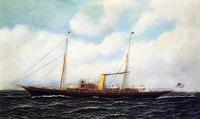
Steamship Riviera
Antonio Jacobsen
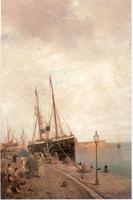
At the dock
Konstantinos Volanakis
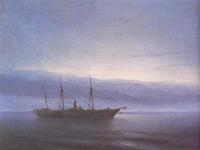
Before battle. Ship. Constantinople
Ivan Aivazovsky
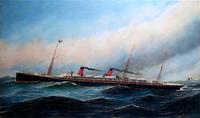
The S. S. Touraine of the French Line at Sea
Antonio Jacobsen
The capture of Turkish nave on Black sea
Ivan Aivazovsky