Expert analysis of Oskar Kokoschka’s Two children
Style: Expressionism · Genre: portrait
Expert Analysis of "Two Children" by Oskar Kokoschka
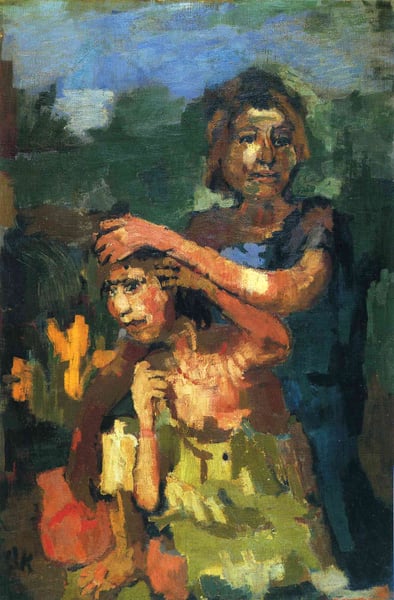
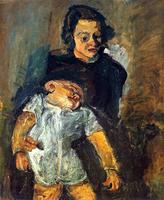
As an Expressionist portrait, Oskar Kokoschka’s Two Children exemplifies the movement’s radical departure from naturalistic representation toward psychological intensity and emotional truth. Within the context of early 20th-century German and Austrian Expressionism, Kokoschka was a pivotal figure whose portraits often probed the inner lives of his subjects—here, even children are not idealized but presented with a raw, unsettling immediacy.
Significance within Expressionism:
- Psychological Depth: Unlike conventional children’s portraits that emphasize innocence or charm, Kokoschka’s work reveals anxiety, vulnerability, or a jarring maturity. The children’s gazes, posture, and spatial relationship likely convey a sense of disquiet or estrangement, reflecting the Expressionist belief that art should expose hidden emotional realities.
- Distorted Form and Vibrant Color: Kokoschka’s characteristic agitated brushwork and jarring, non-naturalistic palette (often acidic greens, blues, and reds) destabilize the viewer’s expectations. The children’s features may be elongated or asymmetrical, pushing beyond mere likeness to evoke a visceral response—a hallmark of Kokoschka’s technique that influenced later figurative expressionism.
- Social Commentary: By depicting children—typically symbols of future hope—in a strained, almost haunted manner, Kokoschka subtly critiques the fragile psychological state of a society on the brink of modernity and war. This aligns with Expressionism’s broader mission to confront the alienation and anxiety of the human condition.
Why It Matters: Two Children is significant because it demonstrates how Kokoschka transferred the psychological portraiture he applied to adults—often portraits of intellectuals and artists—to young subjects, thereby expanding the expressive range of the portrait genre. It stands as a powerful example of how Expressionism broke from the academic tradition by prioritizing subjective emotional experience over objective visual accuracy, making childhood itself a site of profound, often unsettling, inner life.
Visually similar
20 works with related composition and palette
Arab Woman and Child
Oskar Kokoschka

Portrait of a young girl
Romualdo Locatelli
A Girl with Flowers
Oskar Kokoschka
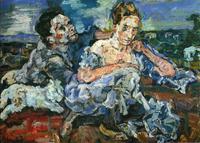
Lovers with Cat
Oskar Kokoschka
Woman at Her Toilette
Edgar Degas
Street musicians of Jakarta
Romualdo Locatelli
Bela Czobel Girl
Bela Czobel
Waitress
Nikola Martinoski
A red skirt
Pablo Picasso
Men at Bar
Kenneth Baker
Orfeus and Euridice
Oskar Kokoschka
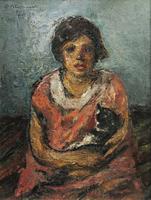
Girl With Cat
Gheorghe Petrascu
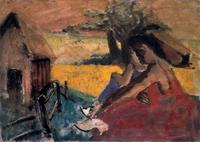
Rural Scene
Mark Rothko
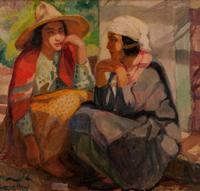
Roceira
Georgina de Albuquerque
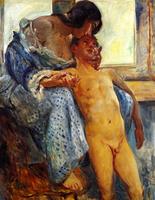
A Mother's Love
Lovis Corinth
Seated Young Girl with Hat
Pierre-Auguste Renoir
Sammy and His Mother
Robert Henri
3 Men
Kenneth Baker
Seated Peasant Woman
Camille Pissarro
Maternity
Chaim Soutine