The Scream
Analisi esperta di The Scream di Richard Lindner
Stile: Mechanistic Cubism · Genere: figurative
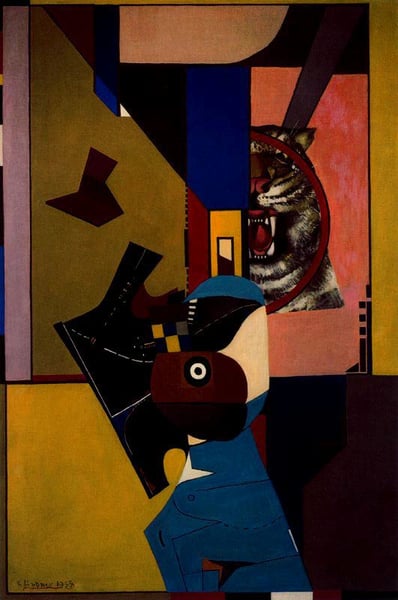
Richard Lindner’s The Scream stands as a compelling example of Mechanistic Cubism, a style that fuses the geometric fragmentation of Cubism with the cold, industrial precision of machine forms. While the title inevitably evokes Edvard Munch’s expressionist cry of existential angst, Lindner reinterprets the scream through a distinctly modern, urban lens—one where human emotion is rendered through metallic, almost robotic anatomy.
Significance within Mechanistic Cubism and figuration:
- Hybrid of organ and machine: Lindner constructs the figure with rigid, cylindrical limbs, faceted planes, and sharp, angular contours that recall gears, pistons, or mannequins. The “scream” is not a soft, organic mouth but a mechanical aperture—perhaps a siren or a void—emphasizing the dehumanization of the modern individual.
- Cubist structure with a narrative edge: Unlike early analytical Cubism (which often dissolved the subject), Lindner retains a strong figurative core. His mechanized forms communicate a psychological state: anxiety, alienation, or trapped expression in a world of industry and consumption. The scream becomes a release of pressure from a constructed, rigid body.
- Color and flatness: Typical of Mechanistic Cubism, Lindner uses bold, flat planes of color (often primary or industrial hues) with hard outlines, eliminating atmospheric depth. This reinforces the sense of a figure imprisoned in a two-dimensional, manufactured space.
- Period context: Created during the post-war era of technological anxiety and pop-culture saturation, The Scream anticipates both Pop Art’s fascination with the artificial and late Cubism’s exploration of the human as a machine. Lindner’s work here is significant for bridging Cubist formalism with a critique of mechanized existence, making the scream both a formal experiment and a poignant commentary on modern life.
Visivamente simili
20 opere con composizione e palette affini
L'Étonnement
Julio Pomar
Tiger
Franz Marc
Bild
Pablo Picasso
Study for Aviation. Evolution of Forms Under Aerodynamic Limitations (Newark Airport Mural)
Arshile Gorky
The table
Pablo Picasso
Cubist Composition
Maria Blanchard
The typographer
Fernand Leger
Le Luxe
Julio Pomar
Bodegón Cubista
Maria Blanchard
Tolérance
Georges Troubat
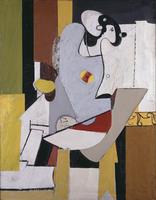
Blue Figure in a Chair
Arshile Gorky
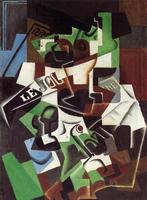
Fruit Bowl, Pipe and Newspaper
Juan Gris
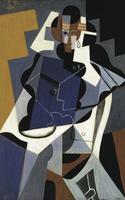
Seated Woman
Juan Gris
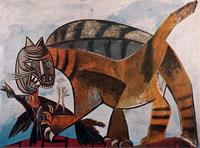
Cat eating a bird
Pablo Picasso
Tiger in Love
Corneille
Composición Cubista
Maria Blanchard
Composition
Arshile Gorky
Composición Maquinista
José Pedro Costigliolo
Naturaleza Muerta Composición
Maria Blanchard
Still Life at the Sea
Antonio Corpora