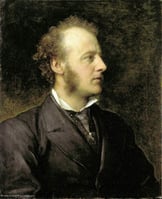
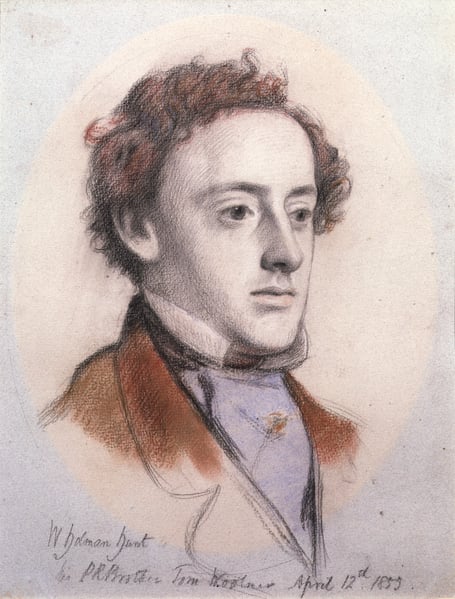
Analisi esperta di Portrait of John Everett Millais di John Everett Millais
Stile: Realism · Genere: self-portrait
Expert Analysis of "Portrait of John Everett Millais" by John Everett Millais
This self-portrait, executed by the artist himself, stands as a compelling document of both personal identity and artistic conviction within the Realist tradition. Although John Everett Millais was a founding member of the Pre-Raphaelite Brotherhood—a group that famously rejected conventional academic artifice in favor of meticulous naturalism—this work aligns squarely with the core tenets of Realism: an unvarnished, truthful representation of the subject.
Significance within the Realist Style: The painting’s significance lies in its refusal to idealize. Millais presents himself not as a romanticized genius, but as a working artist—direct, composed, and understated. The attention to the nuanced play of light on the face, the subtle modeling of features, and the restrained palette emphasize verisimilitude over drama. This mirrors Realism’s broader ambition to elevate everyday life and authentic human presence, rejecting the grandiosity of history painting.
Significance as a Self-Portrait: As a self-portrait, the work offers a rare introspective moment from an artist famed for his highly detailed narrative paintings. Millais captures himself in a moment of quiet scrutiny, his gaze meeting the viewer’s with a mixture of confidence and introspection. This directness reflects the Realist belief in capturing the sitter’s essential character without flattery or allegory. It also serves as a personal manifesto: here is the artist as he truly sees himself—neither mythologized nor sentimentalized.
Contextual Relevance: Created during a period when Millais was transitioning from the intense symbolism of his early Pre-Raphaelite work toward a broader realism, this portrait marks a pivotal moment in his career. It demonstrates his mastery of lifelike representation while retaining the psychological depth that would define his later portraiture. The work thus becomes a key artifact for understanding how Millais—and the Realist movement—sought to authenticate the artist’s own image, stripping away artifice to reveal the person behind the brush.
Visivamente simili
20 opere con composizione e palette affini
Portrait of John Everett Millais
William Holman Hunt
François-René de Chateaubriand, French writer, politician and diplomat
Achille Devéria
Victor Hugo
Achille Devéria
Portrait of Johann Karl Baehr
Leopold Pollak
Anton Bernhard Fürstenau, German flutist and composer
Josef Kriehuber
Chopin
Franz Xaver Winterhalter
François René Auguste Vicomte de Châteaubriand
Achille Devéria
Portrait of Javier Goya, the Artist's Son
Francisco Goya
Portrait of P. V. Basin
Karl Bryullov
Portrait of a man
Orest Kiprensky
Ramón Mesonero Romanos
Rosario Weiss Zorrilla
Portrait of Moritz Loehr
Leopold Pollak
Self-Portrait
Johann Nepomuk Passini
Eduard Woyna
Josef Kriehuber
First Previous 3 OF 617 NextLast
Charles Turner
Antonio Tamburini, Italian Baritone
Josef Kriehuber
Portrait of Ford Madox Brown
Dante Gabriel Rossetti
Sketch-Portrait of Louis-Michel-Victor Mercier
Henri Lehmann
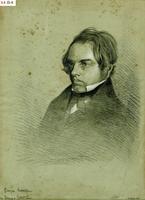
George Cotman
Frederick George Cotman
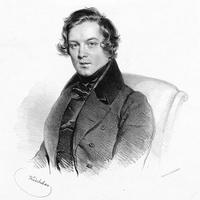
Robert Schumann, Austrian Composer
Josef Kriehuber