Expert Analysis: Study for Ophelia by John Everett Millais
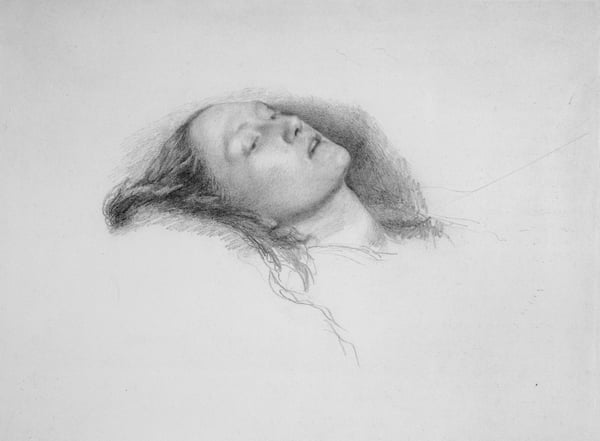
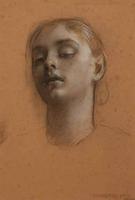
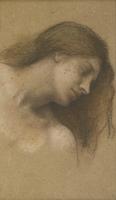
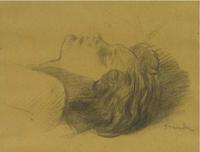
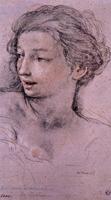
Within the Romantic movement, Millais’s Study for Ophelia stands as a testament to the era's obsessive pursuit of natural truth and emotional depth. Although the finished Ophelia is celebrated as a Pre-Raphaelite masterpiece, this preparatory sketch captures the raw, unpolished genesis of that vision.
As a sketch and study, the work reveals Millais’s rigorous methodology—a hallmark of Romanticism’s turn toward direct observation of nature. Every line and shadow is not merely preparatory but an act of devotion to the subject’s tragic beauty. The study’s significance lies in its rawness: it strips away the later painting’s lush, symbolic detail, leaving only the essential form of the drowning Ophelia. This immediacy allows viewers to witness the artist’s hand and mind at work, embodying Romanticism’s core value of individual expression over polished convention.
In this context, Study for Ophelia is more than a stepping stone; it is a concentrated expression of Romantic melancholy and the sublime in nature—a fleeting moment of artistic truth that both precedes and transcends the finished canvas.