Expert Analysis: "Panel 17. Gods of the Modern World - The Epic of American Civilization"
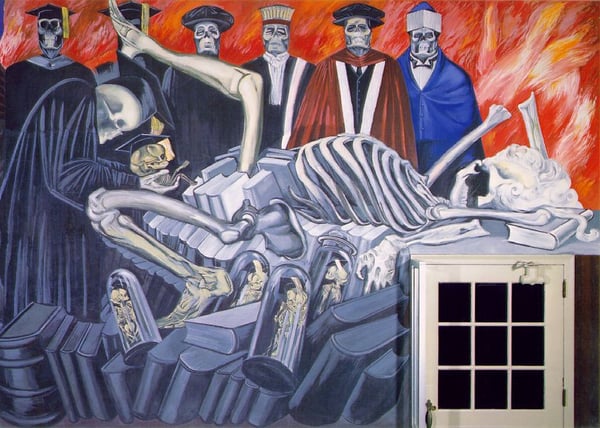
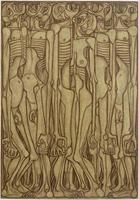
In this panel, José Clemente Orozco delivers a searing critique of modern intellectual and institutional life, a hallmark of his contribution to the Muralism movement. The work functions as a symbolic painting that subverts the traditional celebratory tone of public murals, instead exposing the hollow rituals of academia and the worship of lifeless knowledge.
Significance within Muralism and its Period:
-
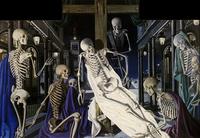
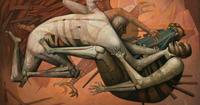
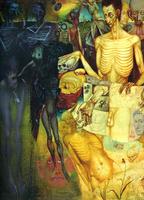
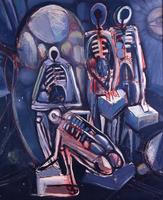
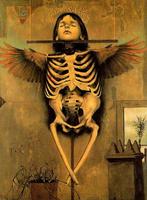
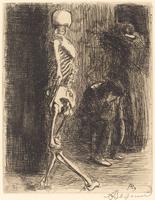
Counter-narrative to utopian nationalism: While many Mexican muralists (e.g., Rivera, Siqueiros) often glorified indigenous heritage or revolutionary progress, Orozco used Gods of the Modern World to indict contemporary Western civilization. The panel depicts skeletal, academic figures—"gods" of a sterile, materialist age—presiding over the birth of a stillborn infant, representing the death of genuine humanistic education. This aligns with Orozco's more pessimistic, existential view of modernity, making the work a crucial counterpoint within the Muralist canon.
-
Formal and symbolic innovation: Orozco employs stark chiaroscuro, angular lines, and a compressed, theatrical space to heighten the sense of moral decay. The repeated motif of mortarboards and books as empty icons underscores the transfer of reverence from traditional gods to false idols of reason and bureaucracy. This symbolic language—direct, visceral, and allegorical—was revolutionary for public art, challenging viewers to question the very institutions meant to uplift them.
-
Enduring relevance: As part of The Epic of American Civilization (1932–34) at Dartmouth College, this panel specifically critiques the U.S. educational system and its role in perpetuating dehumanizing values. It remains one of the most powerful—and controversial—examples of how Muralism could serve as a tool for social and philosophical critique, rather than mere propaganda or decoration.