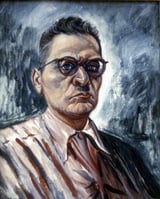
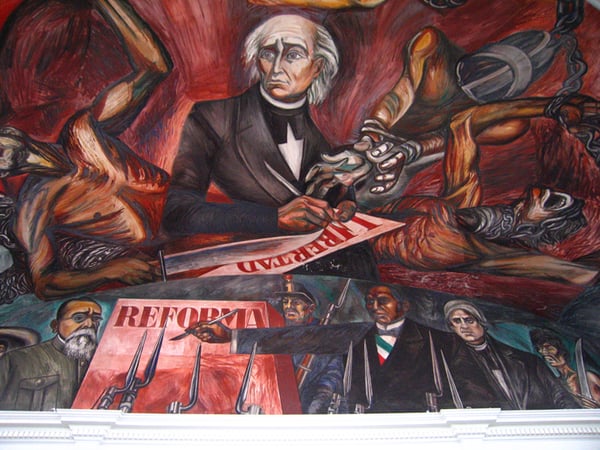
The great mexican revolutionary law and the freedom of slaves
Details
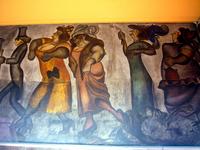
Expert analysis of Jose Clemente Orozco’s The great mexican revolutionary law and the freedom of slaves
Style: Muralism · Genre: symbolic painting
Expert Analysis: "The Great Mexican Revolutionary Law and the Freedom of Slaves" by José Clemente Orozco
Within the bold, public-facing tradition of Mexican Muralism, José Clemente Orozco’s The Great Mexican Revolutionary Law and the Freedom of Slaves stands as a powerfully emblematic work. Executed as a symbolic painting—a genre central to Muralism’s mission of communicating complex social narratives—the artwork directly engages with the foundational promises of the Mexican Revolution: justice, emancipation, and the rule of law.
Significance within Muralism and its Period:
-
Political and Social Commentary: Orozco, alongside Rivera and Siqueiros, used monumental scale to address the struggles of the Mexican people. This piece specifically elevates the abolition of slavery and the establishment of revolutionary law as pivotal, transformative acts. It does not merely depict history; it interprets it as a moral and ideological victory, reinforcing Muralism’s role as a didactic tool for national identity.
-
Symbolic Language: True to the symbolic painting genre, Orozco likely employs stark allegory—figures representing law, liberty, and the formerly enslaved—to distill the revolution’s core aims into a timeless, universal image. This approach sets Muralism apart from mere historical illustration; it creates a visual manifesto.
-
Orozco’s Distinctive Voice: Unlike the more romanticized murals of some contemporaries, Orozco’s work is known for its raw, often grim humanism. Here, the promise of freedom is portrayed with gravity and solemnity, reflecting Orozco’s belief that revolutionary ideals are hard-won and fragile. The painting thus becomes both a celebration and a cautionary monument—a key aspect of his contribution to the movement.
-
Legacy: This artwork exemplifies how Muralism moved beyond decorative public art to become a catalyst for national consciousness. By centering the emancipation of slaves and the power of revolutionary law, Orozco affirms the movement’s core purpose: to give visual form to the people’s history and aspirations, making the struggle for justice an indelible part of Mexico’s cultural heritage.
Visually similar
20 works with related composition and palette

Father Hidalgo
Jose Clemente Orozco
Prometheanist
Jose Clemente Orozco
Omniciencia
Jose Clemente Orozco
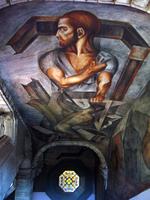
Ceiling of Colegio de San Ildefonso
Jose Clemente Orozco
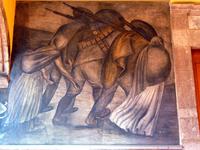
Revolutionaries on the march
Jose Clemente Orozco
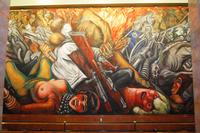
Catharsis
Jose Clemente Orozco
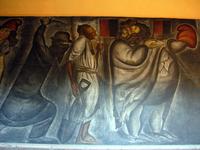
La Acechanza
Jose Clemente Orozco
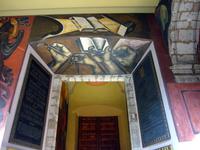
Entrance of Colegio de San Ildefonso
Jose Clemente Orozco
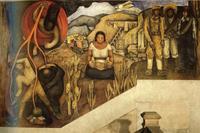
The Mechanization ofThe Country
Diego Rivera
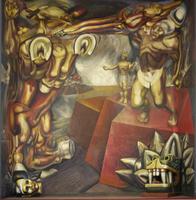
Mural
David Alfaro Siqueiros
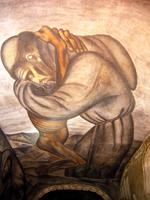
The Franciscans
Jose Clemente Orozco
Ceiling mural of Hospicio Cabanas
Jose Clemente Orozco
The Revolution (mural)
David Alfaro Siqueiros
The Arsenal
Diego Rivera
The World of Today and Tomorrow
Diego Rivera
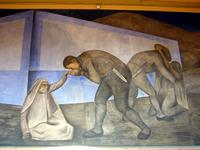
Farewell
Jose Clemente Orozco
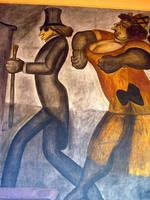
The Rich People (detail)
Jose Clemente Orozco
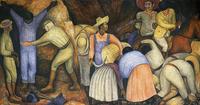
The Exploiters
Diego Rivera
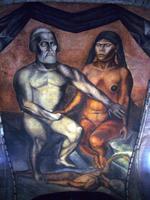
Cortés and La Malinche
Jose Clemente Orozco
The Rich People (detail)
Jose Clemente Orozco