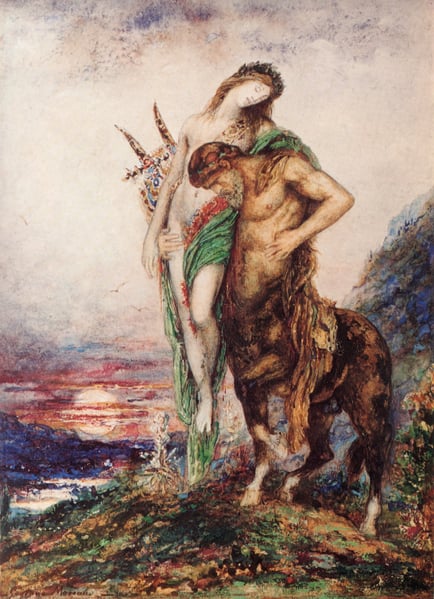
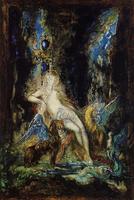
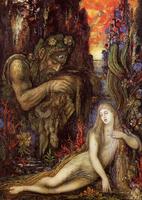
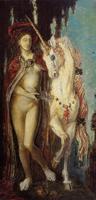
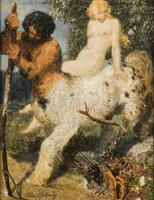
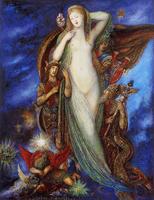
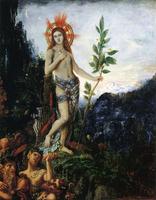
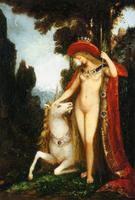
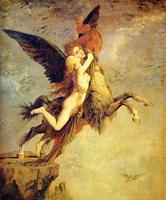
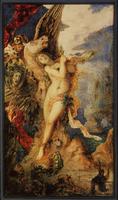
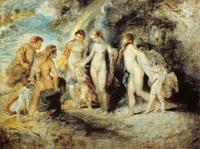
This work by Gustave Moreau is a quintessential example of Symbolist painting, a movement that prioritized subjective emotion, mystical allegory, and the evocative power of myth over literal narrative.
As a mythological painting, "Dead poet borne by centaur" uses classical imagery not for historical recreation, but as a vessel for deeper, often melancholy, introspection. The centaur—a hybrid of reason and instinct—becomes the solemn bearer of the poet, who here symbolizes the isolated, sacrificial nature of the creative spirit. The poet’s death is not merely a physical end but a metaphor for the misunderstood or transcendent artist, a recurring Symbolist theme.
Moreau’s significance lies in his ability to transform a conventional mythological subject into a dreamlike, almost ritualistic tableau. The composition’s stillness, the ethereal color palette, and the fusion of human and beast embody the Symbolist fascination with the intangible—death, inspiration, and the liminal space between the earthly and the ideal. This painting stands as a poignant elegy for the artist’s role in society, making it a key work within the Symbolist canon.