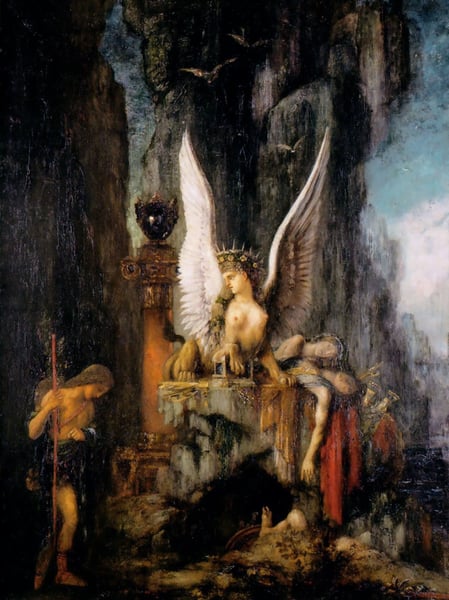
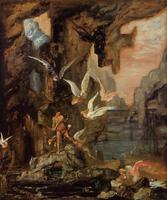
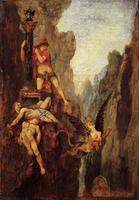
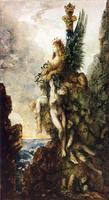
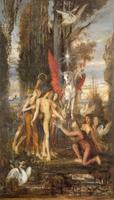
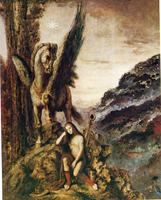
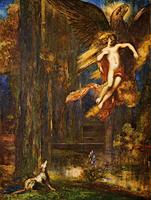
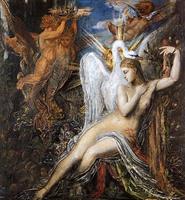
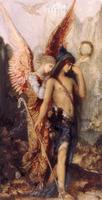
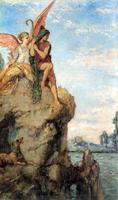
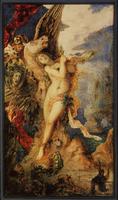
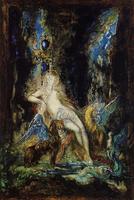
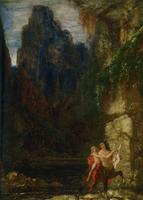
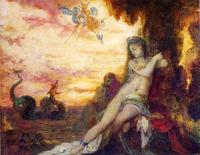
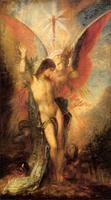
In Gustave Moreau’s Oedipus the Wayfarer, the artist channels the core tenets of Symbolism through a mythological lens, moving beyond mere narrative illustration to evoke inner psychological and spiritual states. The work is significant within the Symbolist movement for its deliberate rejection of naturalistic representation in favor of a dreamlike, enigmatic atmosphere. Moreau’s Oedipus is not simply a heroic figure but an archetype of human destiny, isolation, and the burden of knowledge—themes that Symbolists prized for their ability to suggest the ineffable. The painting’s subdued, almost jewel-like palette, meticulous detail, and ambiguous spatial setting invite contemplation rather than straightforward reading, making it a quintessential example of how Symbolist painters used classical myth to explore modern anxieties about fate, identity, and the unknown.