Expert analysis of Gustave Moreau’s Phoebus and Boreas
Style: Symbolism · Genre: mythological painting
Expert Analysis: "Phoebus and Boreas" by Gustave Moreau
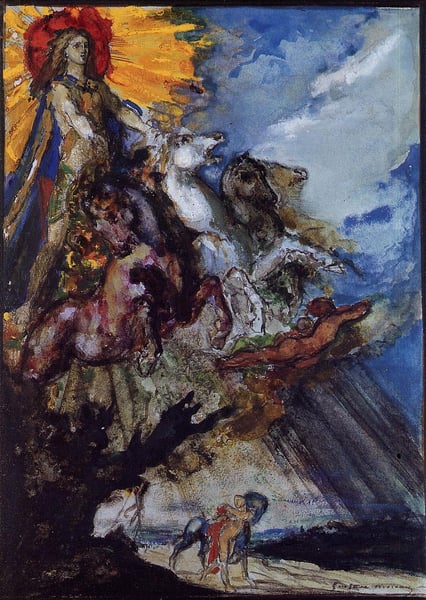
Gustave Moreau’s “Phoebus and Boreas” is a defining work of the Symbolist movement, a style that rejected the literal naturalism of Impressionism and Realism in favor of mythic allegory, dreamlike atmospheres, and inner emotional truths. Painted within the tradition of mythological narrative, this piece exemplifies Moreau’s signature approach: transforming classical subjects into enigmatic, richly layered visions that prioritize psychological depth over narrative clarity.
Significance within Symbolism and Mythological Painting
-
Personification of Opposing Forces: The painting directly contrasts Phoebus (Apollo, god of light, art, and healing) with Boreas (the fierce north wind). Moreau does not depict a simple narrative contest; instead, he presents an eternal, almost cosmic tension—warmth and cold, order and chaos, creation and destruction. This duality is central to Symbolist thought, which sought to express universal spiritual or emotional states through archetypal figures.
-
Decorative Excess and Mystical Ambiguity: Moreau’s hallmark is his meticulous, jewel-like surface. Figures emerge from a dense, ornamental background of swirling draperies, architectural fragments, and luminous halos. The composition resists easy legibility; details are obscured, encouraging prolonged contemplation. This deliberate ambiguity forces the viewer to interpret the symbolic meaning rather than follow a linear story—a core principle of Symbolism.
-
Influence on Later Symbolists and Surrealists: Moreau’s fusion of meticulous technique with fantastical subject matter deeply influenced Odilon Redon, the Nabis, and later Surrealists (especially André Breton, who admired Moreau’s oneiric quality). “Phoebus and Boreas” stands as a bridge between Romanticism’s sublime and Symbolism’s introspective, often unsettling, dreamscapes.
-
Rejection of Modernity: In an era of industrialization and scientific positivism, Moreau deliberately retreated into a world of ancient myth, elevated spirituality, and alchemical mystery. This painting embodies that retreat—not as nostalgia, but as a radical assertion that art’s highest purpose is to depict the invisible, the timeless, and the sublime.
Conclusion: “Phoebus and Boreas” is significant not for its historical fidelity to Greek myth, but for how it transforms myth into a vehicle for personal, symbolic expression. It is a masterwork of Symbolism precisely because it leaves the viewer suspended between narrative and abstraction, light and shadow, clarity and enigma—a visual poem that resists final interpretation.
Museum / Gallery
Visually similar
20 works with related composition and palette
The ride of the Valkyries
Arthur Rackham
Diomedes Devoured by his Horses
Gustave Moreau
Esquisse pour Automédon avec les chevaux d'Achille
Henri Regnault
Horses on the run
Giorgio de Chirico
Horsemen
Rudolf Láng
St. George Slaying the Dragon
Peter Paul Rubens
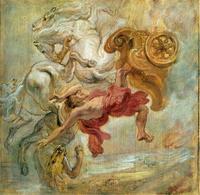
Fall of Phaeton
Peter Paul Rubens
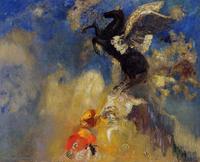
The Black Pegasus
Odilon Redon
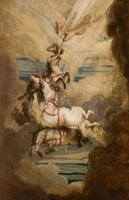
The Fall of Phaëton
James Ward
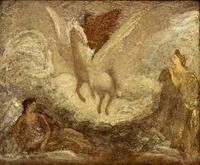
Pegasus Departing
Albert Pinkham Ryder
Horse with rider
Giorgio de Chirico
The Fall of Phaeton
Giorgio de Chirico
Apolo con las Horas
Georg Friedrich Kersting
Https Shared.straussart.co.za Items L 473 47363 1
Amos Langdown
Cavalier over a fallen adversary
Titian
Horse Frightened by a Storm
Eugene Delacroix
Muse on Pegasus
Odilon Redon
Phaethon
Gustave Moreau
Elijah Destroys the Messengers of Ahaziah
Gustave Dore
Apollo's Chariot
Odilon Redon