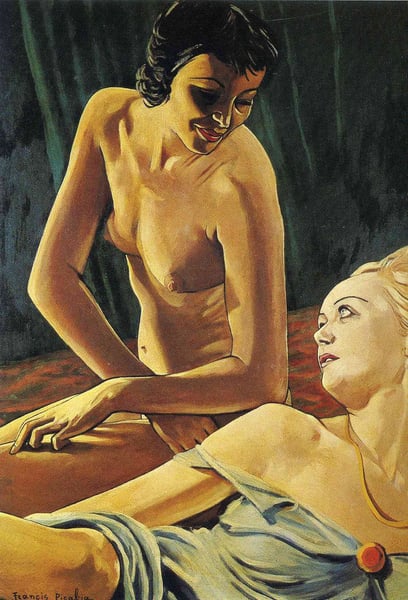
The brunette and blonde
Expertenanalyse zu Francis Picabias The brunette and blonde
Stil: Kitsch · Genre: nude painting (nu)
Expert Analysis: The Brunette and Blonde by Francis Picabia
Francis Picabia’s The Brunette and Blonde stands as a provocative cornerstone of the artist’s later, deliberately controversial engagement with Kitsch—a style he adopted to challenge the very foundations of modernist “high art.” Executed as a nude painting (nu) , this work exemplifies Picabia’s radical break from his earlier Dadaist abstractions and his embrace of a deliberately vulgar, commercialized aesthetic.
Significance within its Style and Period
Picabia’s turn to Kitsch in the 1940s and 1950s was a calculated affront to the seriousness of the avant-garde. By painting nude female figures with the glossy, sentimental, and overtly eroticized look of cheap magazine illustrations or “pin-up” art, he directly subverted the established tradition of the academic nude. Where Old Masters and modernists alike had elevated the nude as a vehicle for idealized beauty, formal composition, or psychological depth, Picabia deliberately flattened it into a product of mass culture.
The pairing of “the brunette and blonde” invokes the clichéd binary of the femme fatale and the ingénue—a staple of Hollywood and pulp fiction. Picabia’s handling is deliberately “poor” in technique: garish colors, clumsy modeling, and a reliance on photographic reproductions rather than life drawing. This is not incompetence but a critical commentary on the commodification of desire and the erosion of aura in an age of mechanical reproduction. The work forces the viewer to confront the boundary between fine art and kitsch, asking whether that boundary even exists.
In the context of Picabia’s career, The Brunette and Blonde represents his final, most nihilistic phase—a rejection of all artistic ideologies, from Cubism to Surrealism, in favor of a cynical embrace of “bad taste.” This strategy anticipates later Postmodern strategies of appropriation, camp, and the deliberate use of lowbrow imagery by artists like Jeff Koons and Richard Prince. The painting’s significance lies in its radical refusal to be “art” on conventional terms, insisting instead that the most honest art of the modern era might be the one that looks most like its advertising.
Visuell ähnlich
20 Werke mit ähnlicher Komposition und Farbpalette
Two Nudes
Francis Picabia
Aramos Pintos
Leopoldo Metlicovitz
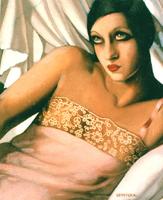
The Pink Shirt
Tamara de Lempicka
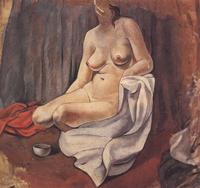
Female Nude
Salvador Dali
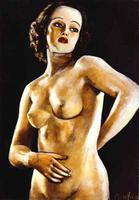
Nude
Francis Picabia
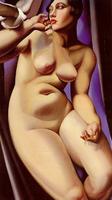
Nude with Dove
Tamara de Lempicka
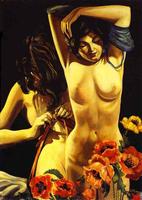
Two Women with Poppies
Francis Picabia
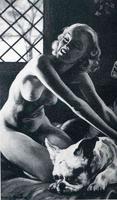
Women with bull-dog
Francis Picabia
not identified
Jack Vettriano
not identified
Jack Vettriano
Sleeping Girl
Tamara de Lempicka
Mirage
Mario Tozzi
The Lady Rose
Paul Delvaux
Andromeda
Tamara de Lempicka
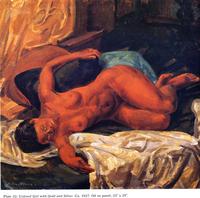
Colored Girl with Gold and Silver
John French Sloan
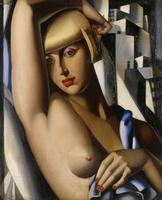
Portrait of Suzy Solidor
Tamara de Lempicka
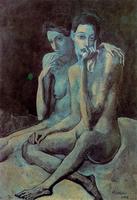
Two friends
Pablo Picasso
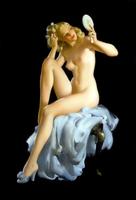
Reflections of Me, Colson, Calendar illustration
Haddon Sundblom
The rest of the models
Felix Vallotton
Naked at dawn
Paul Delvaux