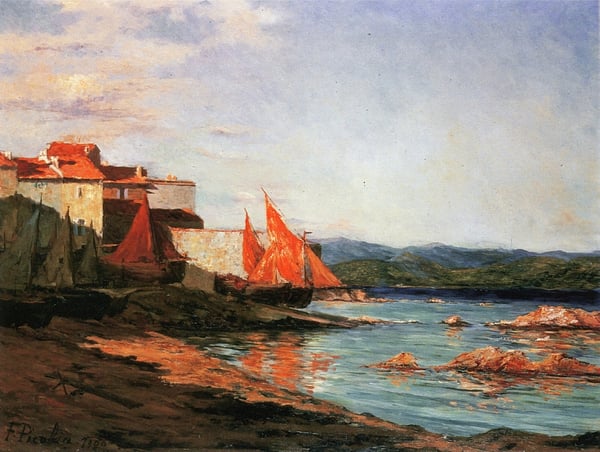
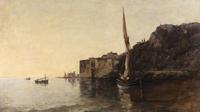
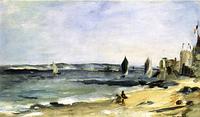
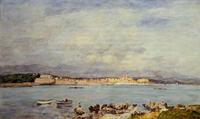
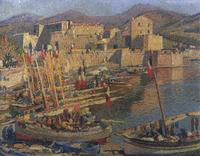
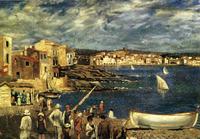
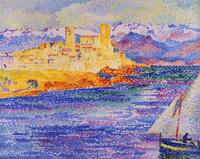
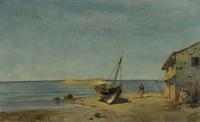
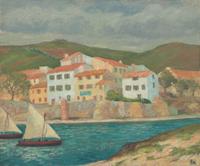
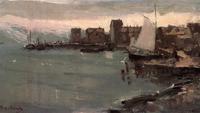
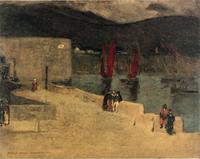
Francis Picabia’s The Point of the Port of Saint-Tropez is a landscape executed in the Impressionist style. Its significance lies in how it exemplifies the core tenets of Impressionism—capturing transient light, atmosphere, and the sensory experience of a specific location—while also marking an early, formative phase in Picabia’s career. As an Impressionist landscape, the work likely emphasizes loose brushwork, a bright palette, and an interest in the effects of sunlight on water and architecture, typical of the movement’s focus on plein-air observation. This painting is particularly noteworthy because Picabia would later become a leading figure in avant-garde movements such as Cubism and Dada; thus, this artwork provides a crucial glimpse into his artistic roots, demonstrating his mastery of Impressionist techniques before he radically departed from them. By situating the scene at Saint-Tropez—a locale that attracted many late Impressionists—the work also connects to the broader trend of depicting modern leisure and coastal life, making it a valuable document of both the artist’s development and the enduring appeal of Impressionist landscape painting.