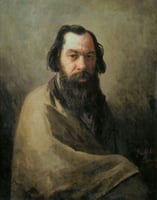
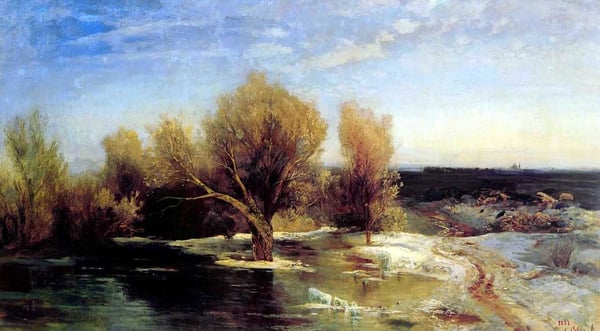
Aleksey Savrasov sanatçısının Spring eseri hakkında uzman analizi
Tarz: Realism · Tür: landscape
Expert Analysis of "Spring" by Aleksey Savrasov
Style: Realism | Genre: Landscape
Aleksey Savrasov’s "Spring" stands as a quintessential example of the Russian Realist landscape tradition, a movement that sought to strip away the academic idealization of nature in favor of intimate, truthful observation. While Savrasov is best known for his landmark work The Rooks Have Come Back (1871), "Spring" similarly captures the quiet, transitional moment of thaw—a subject that became a hallmark of his legacy.
Significance within Realism and Period Context:
-
Emphasis on the Ephemeral: Unlike earlier Romantic landscapes that dramatized nature, Savrasov’s Realism focuses on the subtle, fleeting signs of seasonal change—melting snow, bare branches against a pale sky, and the first hint of damp earth. This attention to transient atmospheric conditions aligns with the Realist commitment to recording the world as it is, not as it should be.
-
Lyrical Intimacy: The painting’s significance lies in its emotional restraint. Savrasov avoids grand vistas or dramatic light; instead, he draws the viewer into a humble, often overlooked corner of the Russian countryside. This “mood landscape” (nastroenie peyzazh)—a term later associated with his pupil Isaac Levitan—prioritizes a personal, almost melancholy response to nature, deeply rooted in the 19th-century Russian cultural longing for authenticity.
-
Influence on the Russian Landscape School: Savrasov’s ability to find profound beauty in ordinary, unheroic scenes helped break the dominance of Italianate or purely decorative landscapes in Russian art. By validating the quiet poetry of central Russian plains and early spring, he paved the way for the psychological depth seen in later works by Levitan, Polenov, and the Peredvizhniki (The Wanderers)—the movement with which he was closely aligned.
What makes "Spring" noteworthy:
While specific details of the composition are not available, the work likely embodies Savrasov’s signature palette of muted earth tones, soft grays, and a delicate silver-blue sky—colors that convey both the chill of lingering winter and the promise of renewal. The painting’s significance is not in dramatic narrative but in its quiet, realist truth: a moment of transition caught with humility and precision, elevating a simple spring thaw into a timeless meditation on nature’s cycle. It remains a touchstone for understanding how Russian Realism turned landscape painting into a vehicle for national identity and profound emotional resonance.
Görsel olarak benzer
İlişkili kompozisyon ve renk paletine sahip 20 eser
After the storm
Aleksey Savrasov
Svislach Landscape
Henryk Siemiradzki
Autumn landscape
Theodor Philipsen
Autumn Landscape with a swampy river in the moonlight
Aleksey Savrasov
Willow by the pond
Aleksey Savrasov
River Scene with a Shepherd and Sheep by a Ferry
Alfred Parsons
Pond at Sunset
Eugene Boudin
Glimpse of the Sea, Long Island
Robert Julian Onderdonk
Pond at Ville d'Avray, with Leaning Trees
Camille Corot
Río de San Ángel
Jose Maria Velasco
A june day
Charles-Francois Daubigny
Fall Scene near Sisterdale
Robert Julian Onderdonk
Mysterious
T. C. Steele
Outside Paris The Heights above Ville d'Avray
Camille Corot

Pond at dusk
Aleksey Savrasov

Winter
Fyodor Vasilyev
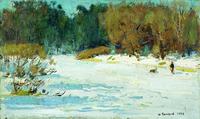
February Sun
Sergiy Grigoriev
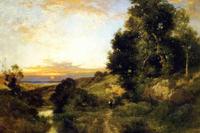
Late Afternoon In Summer
Thomas Moran
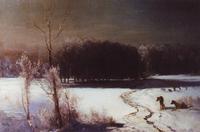
Landscape with wolves
Aleksey Savrasov
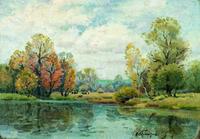
Autumn
Sergiy Grigoriev