Analyse experte de Portrait of Dmitry Stasov de Valentin Serov
Style : Impressionism · Genre : portrait
Artwork: Portrait of Dmitry Stasov (c. 1908)
Artist: Valentin Serov
Style: Impressionism
Genre: Portrait
Expert Analysis & Significance
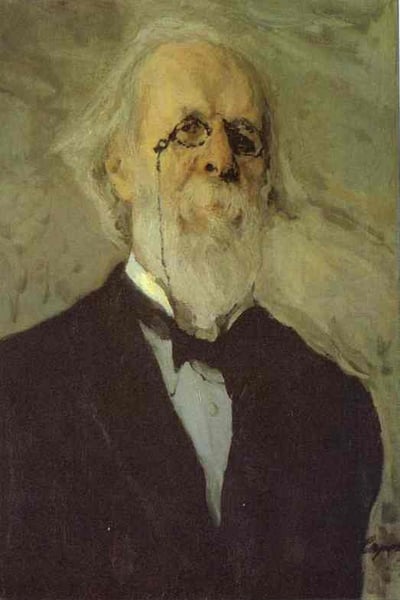
Valentin Serov’s Portrait of Dmitry Stasov stands as a compelling example of Russian Impressionism’s unique fusion of atmospheric immediacy and psychological depth. While Serov is often celebrated for his early, more realist works such as Girl with Peaches, this later portrait demonstrates his mature mastery of Impressionist principles—loose, visible brushwork, a luminous palette, and an emphasis on capturing the fleeting effects of light—while channeling them into a penetrating character study.
Significance within Impressionism and Period Context:
-
Impressionist Technique in Service of Psychological Realism: Unlike many French Impressionists who prioritized optical sensation over subject personality, Serov applies dappled touches of color and broken strokes to model Stasov’s face and hands, yet the sitter’s intense gaze and dignified posture dominate the composition. The painting exemplifies a hallmark of Russian Impressionism: employing the style’s formal innovations to amplify, rather than dissolve, the individual’s inner life.
-
Portrait of a Cultural Icon: Dmitry Stasov (1828–1918) was a towering figure in Russian intellectual and legal circles—a lawyer, music critic, and brother of the influential critic Vladimir Stasov. Serov captures not only Stasov’s advanced age (the portrait was painted when he was about 80) but also his enduring authority, sharp intellect, and slightly melancholic endurance. This merges the Impressionist interest in the “instant” with a timeless, almost historical gravitas.
-
Transition from Realism to Modernism: Serov’s later portraits, including this one, mark a critical bridge between 19th-century Realism (with its commitment to meticulous likeness) and early 20th-century Modernism. The abbreviated, gestural handling of the background—suggestive rather than descriptive—foreshadows the expressive freedom of the Russian avant-garde while remaining anchored to the human subject.
-
Light as Characterization: The cool, silvery light falling across Stasov’s white beard and imposing frame is not mere atmospheric effect; it functions symbolically to emphasize age, wisdom, and an almost stoic clarity. Serov’s restraint—avoiding the sun-drenched vibrato of Monet—allows the sitter’s personality to remain the focal point, redefining Impressionism’s scope for portraiture.
In sum, Portrait of Dmitry Stasov is significant for how it adapts Impressionist language to convey a profound, almost documentary interpretation of a Russian cultural patriarch, proving that the movement’s techniques need not be limited to landscapes or casual scenes but could elevate the traditional portrait into a masterwork of both historical memory and modern artistic sensibility.
Visuellement similaire
20 œuvres à la composition et à la palette proches
Portrait of Ivan Turgenev
Ilya Repin
Portrait of Dmitry Vasilyevich Grigorovich
Ivan Kramskoy
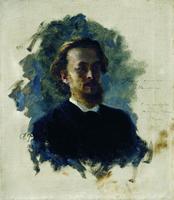
Head of a Man
Ilya Repin
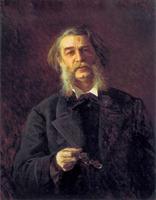
Dmitry Grigorovich, a Russian writer
Ivan Kramskoy
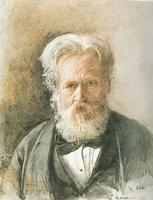
Self-Portrait
Rudolf von Alt
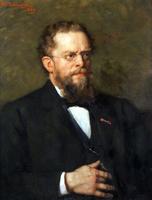
Antoine Paul Nicolaas Franchimont
Thérèse Schwartze
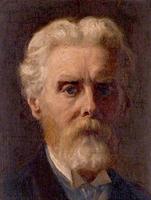
James Archer, Artist, Self Portrait
James Archer
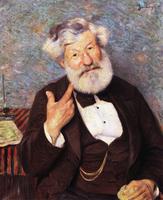
Portrait of the Doctor
Federico Zandomeneghi
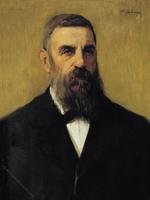
Portrait of a man
Nikolaos Lytras
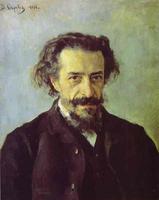
Portrait of Pavel Blaramberg
Valentin Serov
John Pettie, Artist
James Archer
Portrait of Professor Dr. Carl Bernstein
Max Liebermann
Portrait of the Art Critic Vladimir Stasov
Ilya Repin
Portrait of Pavel Chistyakov
Ilya Repin
John Loughborough Pearson
John Pettie
Portrait of Ivan Aleksandrovich Goncharov
Ivan Kramskoy
Portrait of William H. MacDowell
Thomas Eakins
The Internist Professor Samuel Stern
Anton Romako
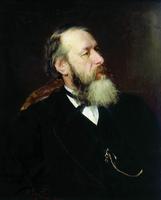
Portrait of the Art Critic Vladimir Stasov
Ilya Repin
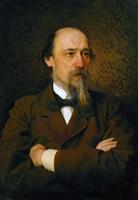
Portrait of the poet Nikolai Nekrasov
Ivan Kramskoy