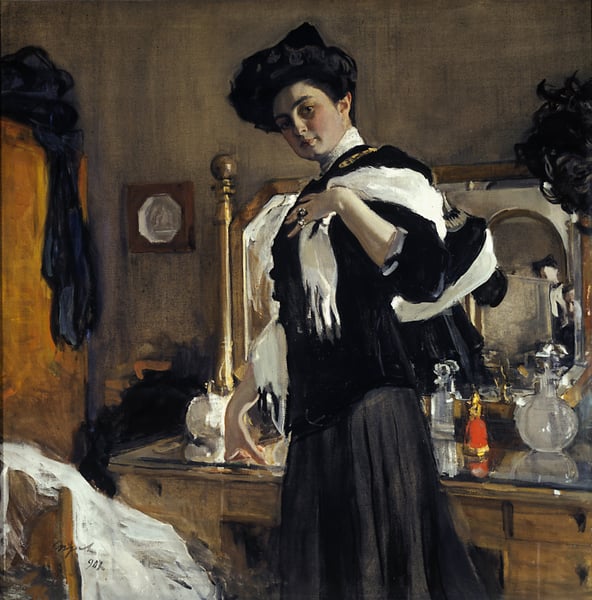
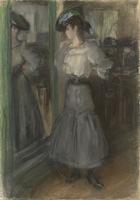
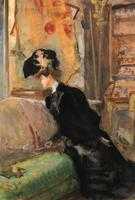
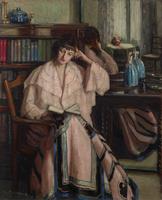
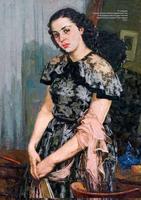
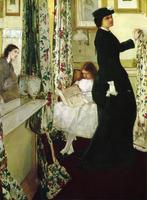
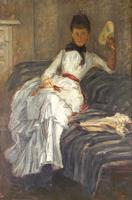
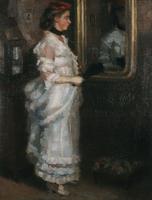
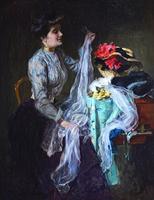
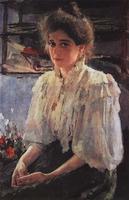
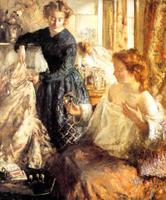
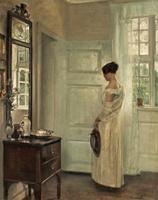
This portrait by Valentin Serov is a masterful synthesis of two distinct modern movements: Impressionism and Art Nouveau (Modern) . Serov’s handling of light and color marks the Impressionist influence—notice the lively, broken brushwork that captures the sitter’s presence with a sense of fleeting atmosphere. Yet the composition is anchored by the sinuous, decorative lines and elegant silhouette typical of Art Nouveau, lending the work a stylized, ornamental grace.
The significance of this piece lies in how Serov reconciles these two approaches within the portrait genre. He uses Impressionist spontaneity to convey personality and psychological depth while imposing Art Nouveau’s refined structure to elevate the sitter’s social status and modernity. This duality reflects a pivotal moment in Russian art at the turn of the 20th century, when artists sought to break from academic convention without abandoning naturalism. The portrait of Henrietta Girshman thus stands as a touchstone of Serov’s ability to merge fleeting sensation with timeless design, making it a definitive example of how Impressionism and Art Nouveau could coexist in a single, cohesive vision.