Analisi esperta di The Frog Tsarevna di Viktor Vasnetsov
Stile: Romanticism · Genere: mythological painting
Analysis of "The Frog Tsarevna" by Viktor Vasnetsov
Style: Romanticism | Genre: Mythological painting
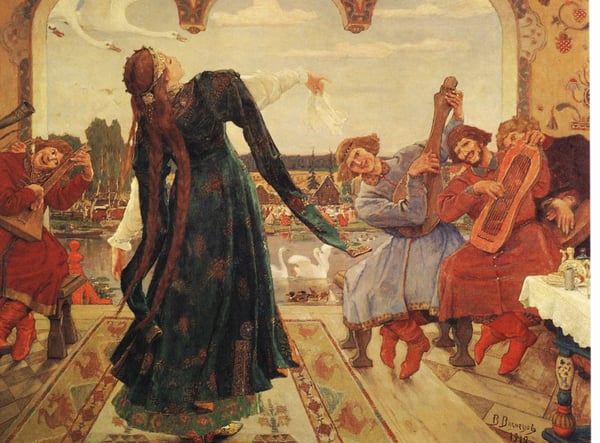
Viktor Vasnetsov’s The Frog Tsarevna stands as a defining example of Romanticism applied to mythological painting—specifically, the Russian folkloric tradition. The significance of this work lies in its embodiment of Romantic ideals: a deep reverence for national identity, the mysterious and supernatural, and the emotional power of legend.
Within the Romantic period, artists sought to escape the rationalism of the Enlightenment by turning to myth, medieval history, and the untamed forces of nature. Vasnetsov channels this impulse directly into a distinctively Russian context. Rather than depicting classical Greco-Roman myths (common in earlier academic painting), he elevates a Slavic fairy tale—the story of Prince Ivan and the enchanted frog-princess—to the status of high art. This act itself was revolutionary: it affirmed that Russia’s own folklore possessed the same depth, beauty, and moral gravity as the myths of antiquity.
The painting’s mythological genre is not merely decorative; it functions as a visual retelling of a tale about transformation, identity, and the triumph of love over appearances. The frog (or hidden princess) becomes a Romantic symbol of the wondrous hidden beneath the ordinary. Vasnetsov’s treatment of the scene—likely emphasizing the moonlit moment of revelation or dance—would have heightened the sense of enchantment and emotional mystery central to Romantic storytelling.
Critically, The Frog Tsarevna helped define the Russian Romantic revival by merging painterly technique with folk motifs. Vasnetsov’s palette, composition, and attention to costume detail (if present) would reinforce the national character of the myth, while the Romantic style imbues the scene with dramatic tension, pathos, and a dreamlike atmosphere. The work’s significance endures because it proves that mythological painting, when rooted in a culture’s own imaginative heritage, can speak as powerfully to universal human experiences as any classical epic.
Visivamente simili
20 opere con composizione e palette affini
Night of Ivan Kupala
Klavdy Lebedev
Who
Sergey Solomko
A Northern Idyll
Konstantin Korovin
Field Party
Iosif Iser
Tough response
Sergey Solomko

Yaroslavna's Lament
Konstantin Vasilyev
Idyll
Sergey Solomko
Waiting
Sergey Solomko
Gorky Reads Shevchenko's Works to Peasants in the Village of Manuilovtsi
Karpo Trokhymenko
Entombment of Alexander Nevsky
Mikhail Nesterov
Joining Kazan to Russia. Allegory
Boris Kustodiev
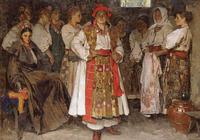
The bride
Fedir Krychevsky
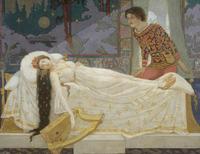
The Sleeping Princess
John Duncan
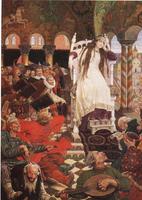
The Unsmiling Tsarevna
Viktor Vasnetsov
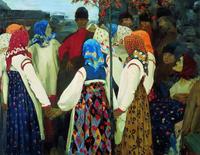
A Young Man Breaking into the Girls Dance, and the Old Women are in Panic
Andrei Ryabushkin
Girls on the bank of the river
Mikhail Nesterov
Arrival tsars Piotr and Ioann
Ilya Repin
На чешмата
Anton Mitov
Meeting of princess
Fyodor Bronnikov
Shopsko Horo
Ivan Mrkviсka