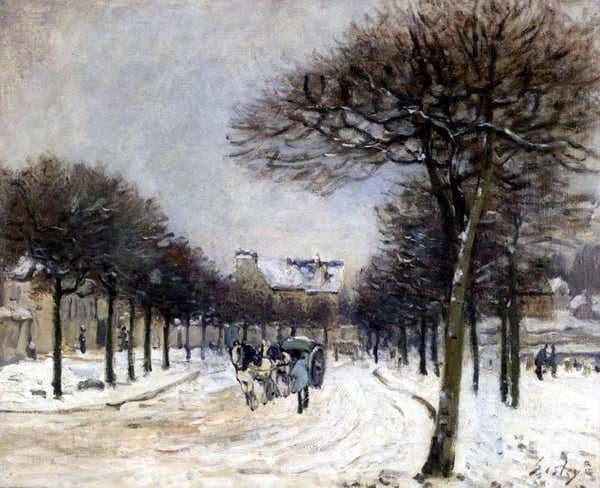
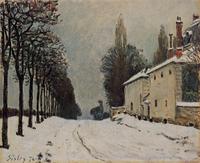
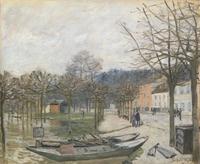
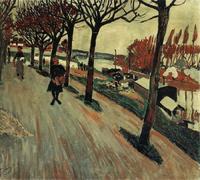
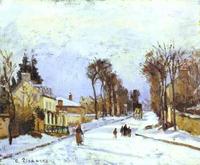
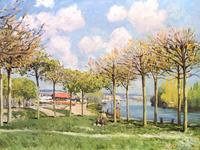
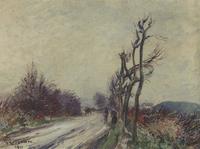
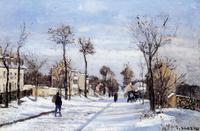
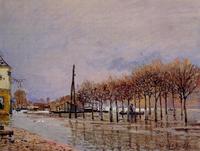
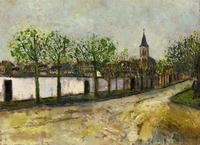
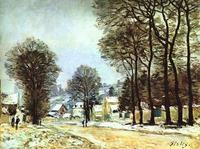
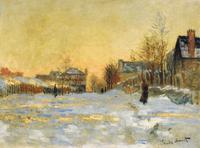
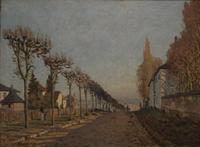
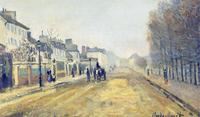
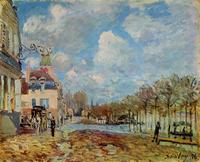
As an expert art historian, my analysis is strictly based on the supplied structured facts: the artwork is "Road from Saint Germain to Marly" by Alfred Sisley, belonging to the Impressionist style and the landscape genre.
Within these parameters, the work's significance lies in its exemplary representation of Impressionist principles applied to landscape. Sisley, as a dedicated landscape painter, uses the genre to capture the transient effects of light and atmosphere—a core aim of Impressionism. The road itself becomes a compositional device leading the eye through a scene that likely emphasizes the play of sunlight, shadow, and color over precise topographical detail. By focusing on an ordinary rural path rather than a dramatic vista, Sisley elevates the mundane, demonstrating the movement’s shift away from historical or mythological subjects toward contemporary, everyday environments. The loose brushwork and emphasis on perceptual immediacy, hallmarks of the style, allow the painting to communicate a fleeting moment of weather and season, making it significant as a pure, unembellished Impressionist landscape that prioritizes visual sensation over narrative.