Analisi esperta di Dolbadern Castle di J.M.W. Turner
Stile: Romanticism · Genere: landscape
Expert Analysis: "Dolbadern Castle" by J.M.W. Turner
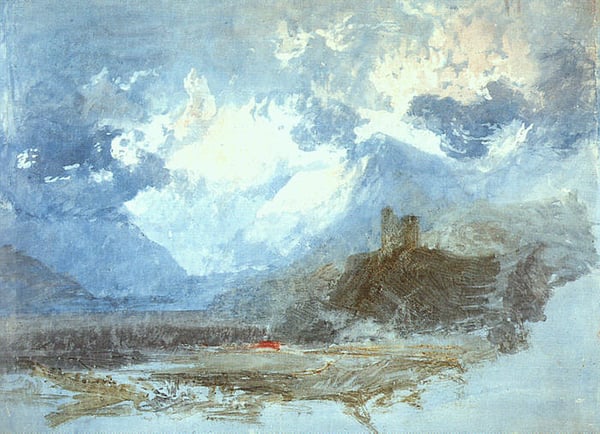
J.M.W. Turner’s Dolbadern Castle is a quintessential example of Romantic landscape painting, a genre that dominated the artist’s oeuvre and defined much of his revolutionary approach to light, atmosphere, and emotional expression. Painted during a period when Turner was deeply influenced by the sublime and the picturesque, this work captures not merely a topographical view of the Welsh ruin but an evocative meditation on nature’s power and the passage of time.
Composition and Subject:
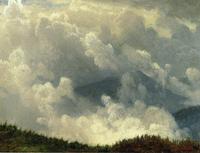
The castle of Dolbadarn, a rugged medieval fortress in North Wales, is set against a sweeping, mountainous backdrop. Turner positions the ruin as a central, brooding presence, silhouetted by a dramatic, glowing sky. The scene is deliberately moody—a low horizon emphasizes the vastness of the landscape, while swirling clouds and hazy light dissolve hard edges, characteristic of Turner’s mature style. The castle itself appears both defiant and decayed, a symbol of human ambition overtaken by the natural world—a core Romantic theme.
Romanticism and Significance:
Within the context of Romanticism, Dolbadern Castle exemplifies the movement’s fascination with the sublime: the awe-inspiring, often terrifying beauty of nature. Turner was a master at translating this into paint. The work’s significance lies in its ability to evoke powerful emotions—a sense of solitude, transience, and the overwhelming scale of the natural environment. Unlike earlier, more literal landscape traditions, Turner prioritizes atmospheric effect over precise detail. Here, the castle is almost swallowed by light and shadow, suggesting the insignificance of human structures against the forces of weather and time.
Turner’s Innovation:
This painting is significant for its forward-looking technique. Turner’s loose, expressive brushstrokes and vibrant, layered washes of color—especially the yellows and oranges of the sky—prefigure Impressionism. He captures the fleeting effects of light (perhaps at dawn or dusk), transforming a historical ruin into a vehicle for pure visual sensation. The work thus bridges the Romantic obsession with feeling and the later modernist interest in perception.
Cultural and Artistic Impact:
Dolbadern Castle also reflects the Romantic era’s revival of interest in Celtic and medieval heritage, treating the ruin as a site of poetic melancholy. In Turner’s hands, landscape becomes not a static record but a dramatic narrative—a testament to nature’s enduring power and humanity’s ephemeral presence. This approach cemented his reputation as the leading British Romantic painter and influenced generations of artists who sought to merge emotion with the natural world.
Conclusion:
As a Romantic landscape, Dolbadern Castle is significant for its sublime mood, innovative light effects, and philosophical depth. It stands as a masterful synthesis of Turner’s technical genius and the Romantic spirit—a work that elevates a specific Welsh location into a universal symbol of nature’s eternal majesty and the quiet ruin of human history.
Museum / Gallery
Visivamente simili
20 opere con composizione e palette affini
The Lake of Zug
J.M.W. Turner
Goldau
J.M.W. Turner
Lake Geneve before the Storm
Gustave Courbet
Val d'Aosta: Snowstorm, Avalanche and Thunderstorm
J.M.W. Turner
View To The Mount Santis
Willy Schlobach
Lorelei
Albert Pinkham Ryder
Gathering Clouds
Benjamin Brown
Sunset Vespers at the Old Rugged Cross
Thomas Moran
Seascape
Jean-Baptiste Carpeaux
Sunset, Navarro Ridge, California Coast
Ralph Blakelock
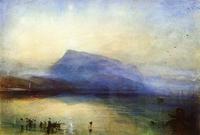
The Blue Rigi Lake of Lucerne Sunrise
J.M.W. Turner
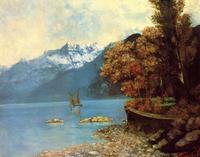
Lake Leman
Gustave Courbet
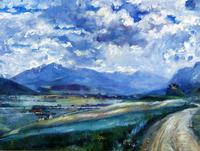
Inn Valley Landscape
Lovis Corinth
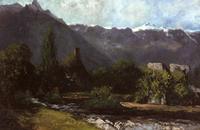
The Glacier
Gustave Courbet

Sea coast. View of Mount Demerdzhi
Arkhyp Kuindzhi
Near Knaresborough
David Cox
Norham Castle, Sunrise
J.M.W. Turner
Landscape
Ralph Blakelock
Landscape with Cottages
John Constable
Mountain Mist
Albert Bierstadt