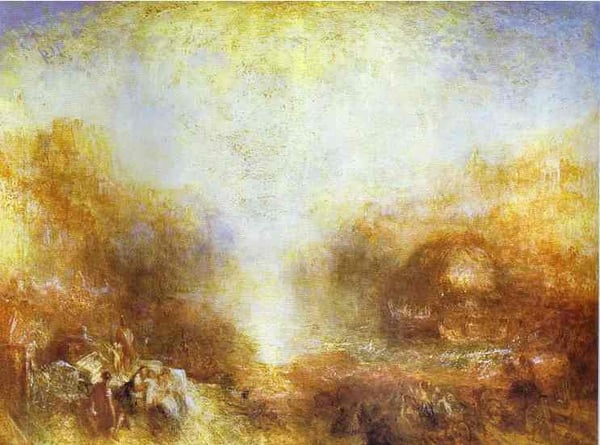
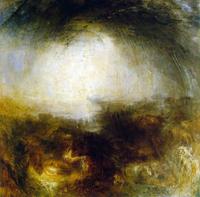
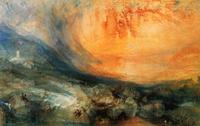
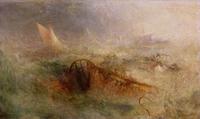
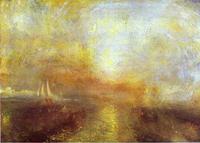
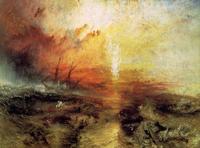
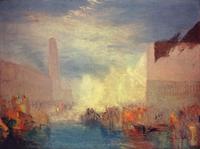
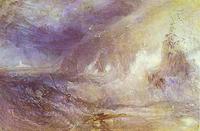
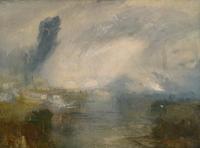
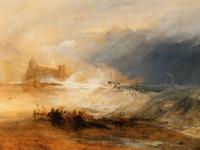
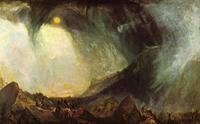
This work is significant as a prime example of Romantic-era marina painting, where J.M.W. Turner merges classical narrative with the sublime power of the sea. The title, "Mercury Sent to Admonish Aeneas," indicates a mythological subject drawn from Virgil’s Aeneid, yet Turner places the drama within a turbulent maritime setting. In the Romantic style, the emotional and atmospheric qualities of the scene—the vast, churning waters and the interplay of light and storm—take precedence over precise historical detail. As a marina, the painting focuses on the sea as both a physical and symbolic force, aligning with Romanticism’s fascination with nature’s overwhelming majesty. Turner’s treatment elevates the genre by infusing a historical-mythological narrative with the immediacy and dynamism of a seascape, highlighting the human struggle against elemental power. This synthesis of narrative, emotion, and natural sublimity is what makes the work a notable contribution to both Romanticism and the marina tradition.