Analisi esperta di Curtain Design for the 'Free Theatre' in Moscow di Konstantin Somov
Stile: Art Nouveau (Modern) · Genere: design
As an expert art historian analyzing the provided facts, I can offer the following focused analysis based solely on the structured information given.
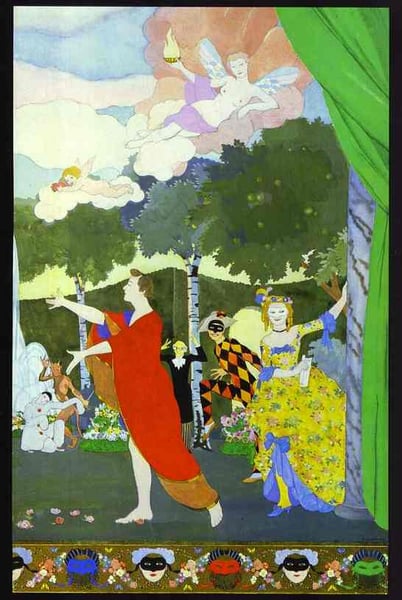
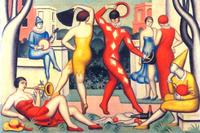
Analysis of "Curtain Design for the 'Free Theatre' in Moscow" by Konstantin Somov
The significance of this artwork lies in its embodiment of the Art Nouveau (Modern) movement's core ambition: the synthesis of fine art, architecture, and performative space into a unified, expressive whole. As a design for a theatre curtain, this piece moves beyond mere decoration to function as a conceptual gateway, immediately establishing the aesthetic and emotional tone of the theatrical experience before a single actor appears.
Its importance is rooted in several key factors:
-
Context of the "Free Theatre": The very name "Free Theatre" in Moscow (a likely reference to the Svobodny Teatr, an avant-garde venture of the early 1910s) signals a break from tradition. Somov's curtain design would have been commissioned to visually announce this liberation—from naturalism, from convention, and from academic restraint. As a modernist work, it uses the stage curtain, a liminal object between audience and performance, as a manifesto.
-
Art Nouveau as a Total Work of Art (Gesamtkunstwerk): Within the Art Nouveau style, the design of a theatrical curtain is a supreme example of the movement's desire to dissolve boundaries between media. Somov, a key member of the "World of Art" group, specialized in this kind of refined, decorative synthesis. The curtain is not a painting to be hung on a wall; it is an integral component of the theatre's architecture and the performance's atmosphere. Its significance is found in its role as a functional, immersive object that prepares the spectator for a stylized, anti-realist world.
-
Genre (Design) and Artistic Hierarchy: By explicitly classifying this work as "design" (rather than painting or drawing), we recognize its challenge to the traditional hierarchy that placed fine art above applied arts. The Art Nouveau movement championed the artist-designer, and Somov's curtain design asserts that a functional object—a stage curtain—deserves the same creative intelligence and aesthetic rigor as a canvas. Its significance lies in its elevation of applied design to a fine art status.
In summary, "Curtain Design for the 'Free Theatre' in Moscow" is significant as a quintessential Art Nouveau object: it is a designed threshold that merges visual art with architectural and theatrical space, embodying the modernist drive to create a cohesive, stylized, and liberated artistic world. Its identity as a design for a specific avant-garde context underscores its role as a declaration of artistic freedom.
Museum / Gallery
Visivamente simili
20 opere con composizione e palette affini
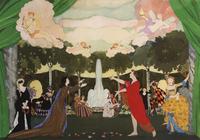
The Curtain Sketch for the Free Theater in Moscow
Konstantin Somov
La Femme à L'Ara
Jean Dupas
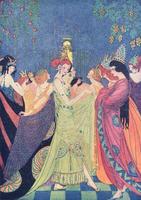
Charles Scribner's Sons
Elenore Abbott
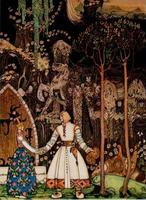
The Wolf is Waiting
Kay Nielsen
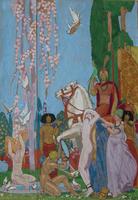
La Procession
Jean Dupas
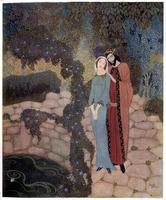
Stealers of Light by the Queen of Romania
Edmund Dulac
Festival in Figueras
Salvador Dali
Rumplestiltskin
Kay Nielsen
Scène De Carnaval
Gerda Wegener
Fairy Tales by Hans Christian Andersen
Harry Clarke
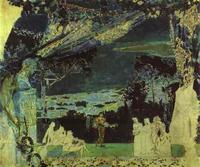
Italian Night in Naples (Sketch for the curtain in Russian Private Opera)
Mikhail Vrubel
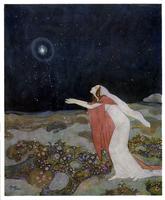
Stealers of Light by the Queen of Romania
Edmund Dulac
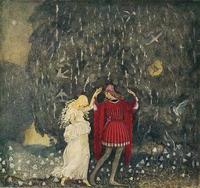
Tomtar
John Bauer
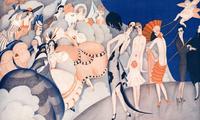
Illustration
Gerda Wegener
Italian Comedy 2
Konstantin Somov
Love, Desire, and Death
George Barbier
Córdoba
Julio Romero de Torres
Le Bal masqué, La Comédie Italienne
Jean Metzinger
Les Arlequins
Jean Metzinger

Goosegirl
Kay Nielsen