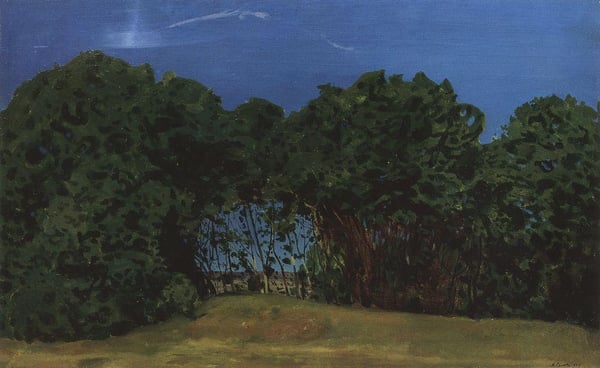
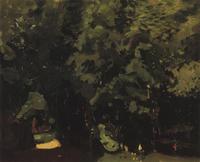
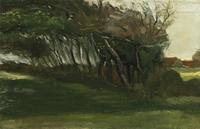
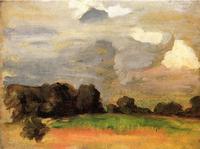
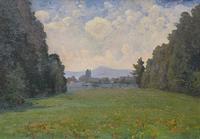
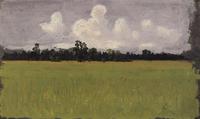
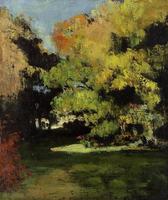
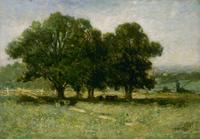
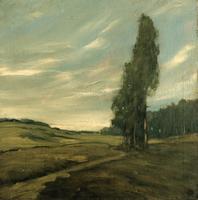
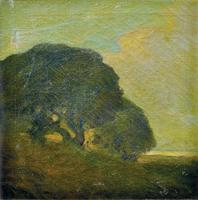
In "Summer Landscape," Konstantin Somov works within the Symbolist tradition to transform the landscape genre from a record of nature into a vehicle for mood and inner vision. As a key figure in Russian Symbolism and the World of Art group, Somov often rejected direct naturalism in favor of a deliberately artificial, nostalgic, and psychologically charged atmosphere. Lacking specific visual details from the painting itself, the significance here lies in the artist’s proven approach: a summer scene becomes not a sunny, pastoral idyll but a carefully staged, melancholic reverie. The choice of a landscape allows Somov to evoke a sense of fleeting, borrowed beauty—a hallmark of Symbolism, where nature serves as a metaphor for intangible emotional states. The work’s importance within Somov’s oeuvre and Symbolist painting more broadly rests on this deliberate blurring of reality and dream, using a conventional genre to articulate a deeply subjective, often poignant, vision of a world suspended in time.