Analisi esperta di Likvidambra Taiwan and the cicada di Qi Baishi
Stile: Ink and wash painting · Genere: flower painting
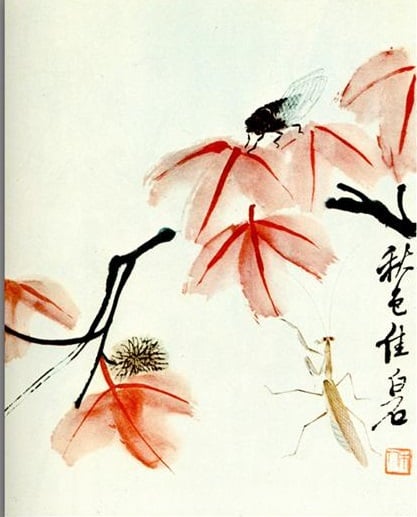
Expert Analysis of "Likvidambra Taiwan and the Cicada" by Qi Baishi
Qi Baishi (1864–1957) is celebrated for his ability to merge the free-spirited xieyi (写意, "sketching the idea") tradition of ink wash painting with sharp, almost scientific observation of nature. In "Likvidambra Taiwan and the Cicada," the artist—despite the probable romanization of Liquidambar formosana (a sweetgum tree native to Taiwan)—demonstrates a hallmark of his late style: the dramatic contrast between organic, expressive brushwork and meticulous insect detail.
Stylistic Significance
This work is a quintessential example of Qi’s "flower-and-bird" (huaniao) genre, though it specifically elevates a humble insect to equal status with the plant. The cicada, rendered with exquisite gongbi (工笔, "meticulous") precision—its veined wings, delicate legs, and compound eyes—is perched on a branch of the Likvidambra, whose leaves are dashed in bold, wet ink washes. The spattering and dry-brush accents on the tree bark reflect Qi’s calligraphic training and his admiration for the baishi ("white stone") simplicity of early Qing individualists like Zhu Da (Bada Shanren).
Symbolism and Cultural Resonance
In Chinese art, the cicada (chan) symbolizes immortality, resurrection, and the ephemeral nature of life (its song heralds summer’s peak). The Likvidambra tree, with its star-shaped leaves and colorful autumn foliage, suggests endurance and seasonal change. By pairing these two motifs, Qi Baishi creates a microcosm of natural harmony: the transient insect alights on the durable branch, a visual meditation on life’s fleeting beauty. This interplay of fragility and strength is a core theme in Qi’s oeuvre, reflecting his deep reverence for the ordinary and overlooked.
Technical Mastery
Qi’s genius lies in the economy of brushstrokes. The leaves are executed with a single loaded brush—varying pressure creates gradients of ink from wet to dry, while the cicada’s body is built with layered, semi-transparent washes that mimic chitinous sheen. The absence of background forces the viewer to focus on the tension between the insect’s stillness and the plant’s vitality. This work exemplifies Qi’s later period (after 1920), when he synthesized folk art’s directness with scholarly literati refinement.
Conclusion
"Likvidambra Taiwan and the Cicada" is significant because it embodies Qi Baishi’s revolutionary approach to traditional ink painting: he democratized subject matter, elevated observed realism within loose brushwork, and infused classic symbols with fresh, personal energy. It stands as a masterful dialogue between the precise and the spontaneous—a cornerstone of modern Chinese flower-and-bird painting.
Visivamente simili
20 opere con composizione e palette affini
Studies of Insects, Mantises
Shitao
Praying Mantis on a branch
Qi Baishi
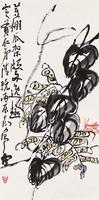
Idyllic Tranquility
Ding Yanyong
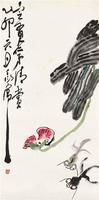
Goldfish
Ding Yanyong
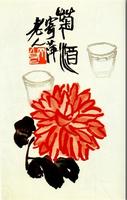
Green wine
Qi Baishi
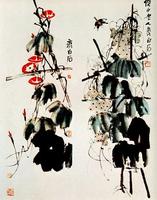
Bindweed and grapes
Qi Baishi
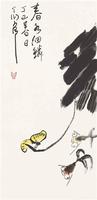
Goldfish and Flowers in Spring
Ding Yanyong
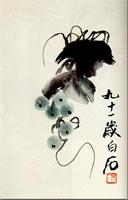
Grapes
Qi Baishi
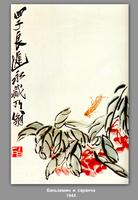
Impatiens and locusts
Qi Baishi
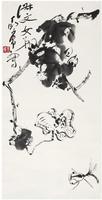
The Fun of Fish
Ding Yanyong
Flower and Bird
Ding Yanyong
Impatiens and butterfly
Qi Baishi
Hanging Scroll
Deiryu
Squirrel
Ding Yanyong
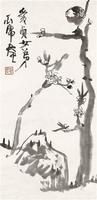
Bird and Flowers
Ding Yanyong
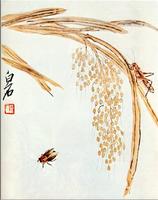
Whisk rice and grasshoppers
Qi Baishi
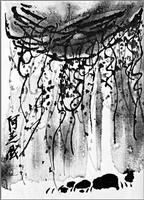
Wisteria
Qi Baishi
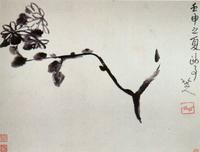
Chrysantheme
Bada Shanren
Blind Men Crossing a Bridge
Hakuin Ekaku
Chrysanthemums
Hakuin Ekaku