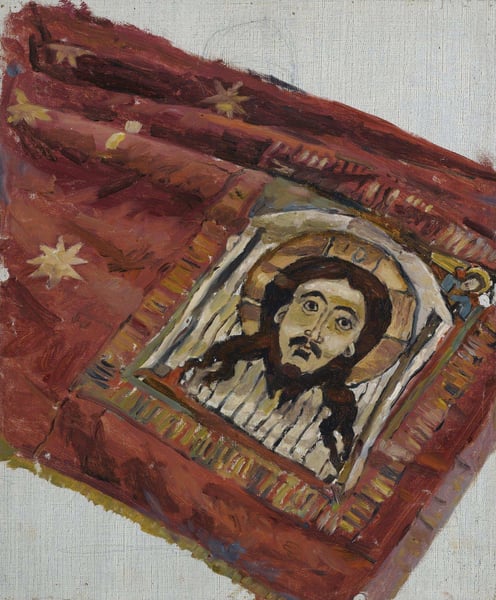
This study by Vasily Surikov offers a fascinating glimpse into the meticulous preparatory process behind one of his masterpieces, The Conquest of Siberia by Yermak (1895). As a work of Russian Realism, its significance lies not only in its exquisite detail but in how it exemplifies the movement’s core commitment to historical authenticity and material truth.
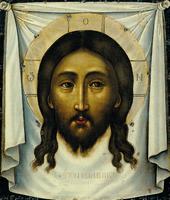
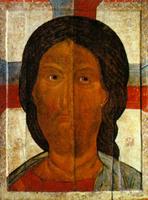
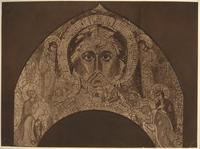
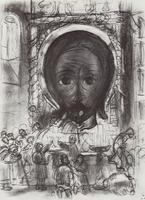
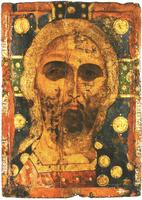
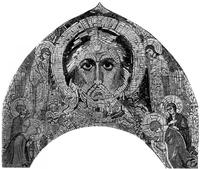
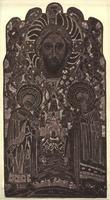
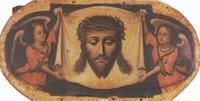
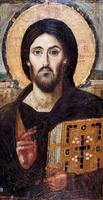
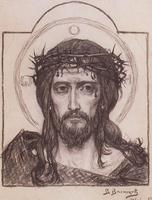
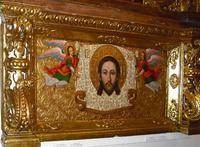
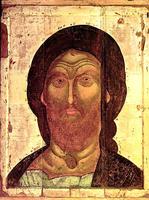
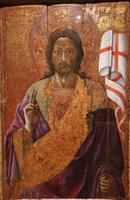
Surikov was renowned for his exhaustive research, and here he isolates a specific, charged object: the military standard bearing the Mandylion (the "Image of Not-Made-by-Hands," a revered relic of Christ’s face). By focusing solely on this cloth—kept in the Armoury of the Moscow Kremlin—he elevates a piece of regalia into a historical and spiritual nexus. The study demonstrates his realist method of capturing the precise texture of aged fabric, the weight of gold embroidery, and the faint, worn image of Christ. This is not a generic banner; it is a documented artifact, rendered with the fidelity of an ethnographic record.
Within the period of Realism, such a study is significant because it reveals the artist’s workshop: the shift from historical narrative to the concrete evidence of objects. Surikov uses this standard to anchor the epic clash of Yermak’s Cossacks and the Siberian Khanate in tangible reality. The Mandylion, a symbol of divine protection and Byzantine-Orthodox authority, becomes a silent protagonist—a visual argument for the providential justification of the conquest. As a standalone work, the sketch commands respect for its disciplined observation, its subtle play of faded color and light on cloth, and its role in transforming a sacred icon into a tool of narrative realism. It is a perfect example of how a study can hold as much artistic and historical weight as the finished canvas.