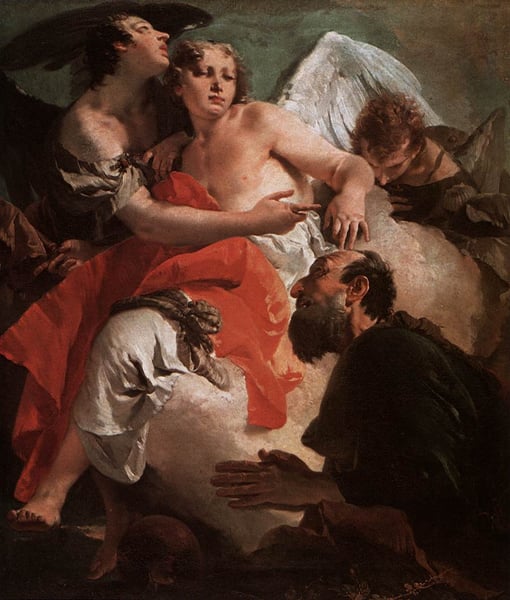
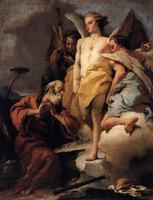
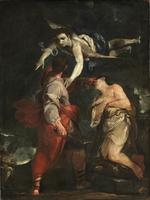
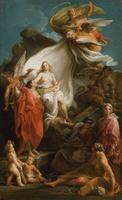
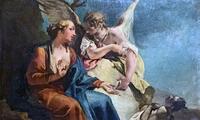
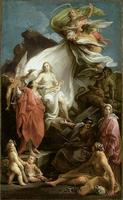
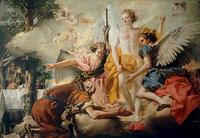
This analysis of "Abraham and the Three Angels" by Giovanni Battista Tiepolo is based solely on the provided structured facts: its Rococo style and religious painting genre.
Expert Description & Significance
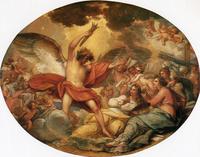
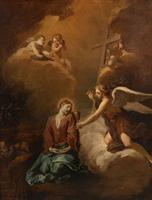
As a prime example of Rococo religious painting, Tiepolo’s work is significant for its masterful fusion of sacred narrative with the characteristic lightness, elegance, and theatricality of the Rococo. Rather than the heavy, dramatic intensity of Baroque religious art, Tiepolo imbues the episode of Abraham and the three angels with an airy, ethereal grace. The painting’s importance lies in how it translates a solemn biblical moment—the visitation of the divine messengers—into a scene of luminous, almost courtly refinement. The angels are not austere heavenly beings but graceful, idealized figures, their poses and flowing draperies conveying a sense of elegant movement and otherworldly charm. This approach epitomizes the Rococo’s preference for sweetness, decorative beauty, and a palette of soft, pastel hues. Tiepolo’s achievement here is to maintain the spiritual gravity of the religious subject while expressing it through the period’s love for ornament, lightness, and visual delight, thus making the sacred accessible and enchanting to the Rococo viewer.