Expert analysis of Ossip Zadkine’s Visitors to the sun
Style: Expressionism · Genre: figurative
Expert Analysis of "Visitors to the Sun" by Ossip Zadkine
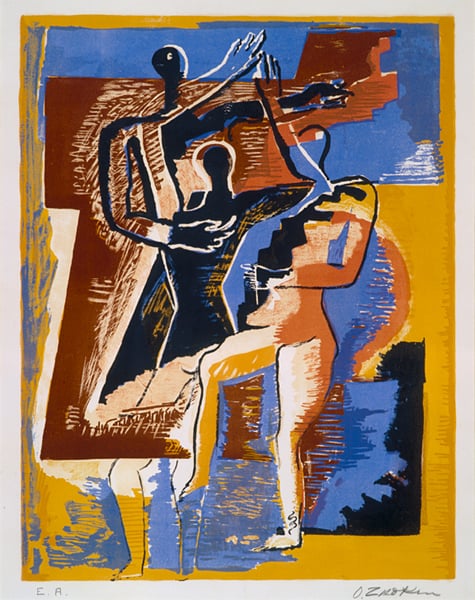
Ossip Zadkine’s Visitors to the Sun is a compelling example of how Expressionism reimagined the human form as a vessel for emotional and symbolic intensity. Working within the figurative tradition, Zadkine simultaneously deconstructs and amplifies the human figure, infusing it with a dynamic, almost cosmic energy. The title itself suggests a narrative of aspiration, transformation, or confrontation—figures drawn toward the overwhelming force of the sun, a universal symbol of life, power, and destruction.
What makes this work significant lies in Zadkine’s distinctive synthesis of two major early-20th-century movements: the structural fragmentation of Cubism and the emotive distortion of Expressionism. While his contemporary Constantin Brâncuşi sought pure, simplified forms, and Alberto Giacometti pursued existential attenuation, Zadkine carved a middle path—retaining figurative recognizability while subjecting it to sharp, angular planes and rhythmic contours. In Visitors to the Sun, the figures are likely elongated, limbs and torsos twisted, as if physically bending under the sun’s influence or ecstatically reaching toward it. This interplay of concave and convex volumes creates a sense of both weight and upward motion, embodying the tension between earthly gravity and celestial pull.
Stylistically, the work belongs to the “École de Paris” context, where Zadkine was a key figure. His use of materials—whether wood, stone, or bronze—accentuates the texture of emotional subject matter. The significance here is not merely formal but thematic: Visitors to the Sun anticipates mid-century existential themes of humanity’s precarious relationship with nature, technology, and the divine. It challenges the viewer to see the human figure not as a static object but as a participant in a larger, almost mythic drama. In this, Zadkine’s piece stands as a bridge between the raw anguish of German Expressionism and the more lyrical, yet equally radical, innovations of French modern sculpture.
Genre
Style
Visually similar
20 works with related composition and palette
Conversation
Ossip Zadkine
The messengers of the Day
Ossip Zadkine
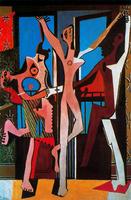
The dance
Pablo Picasso
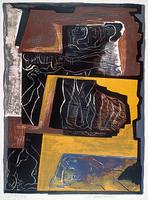
The dream
Ossip Zadkine
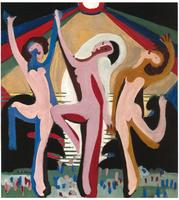
Colourful Dance
Ernst Ludwig Kirchner
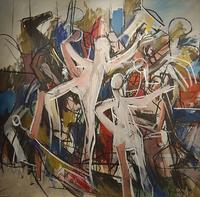
Abduction A
Robert Goodnough
Le bal Musette
Georges Valmier
Abstract figures
Walter Battiss
Bortnyik Sándor, Épitők
Sandor Bortnyik
Dancers
Charles Alston
Figurer I Trappa
Gosta Adrian-Nilsson
The beach in Garoupe
Pablo Picasso
Dancing Female Nude, Gret Palucca
Ernst Ludwig Kirchner
Design for the Wall Painting Colourful Dance
Ernst Ludwig Kirchner
The Joy of Living
Constantin Flondor
Two naked figures
Pablo Picasso
Promenade
Man Ray
Bortnyikm Sándor, A Táncosnő
Sandor Bortnyik
dance of dusk
Toshihiko Okuya
Untitled
Gogi Khutsishvili