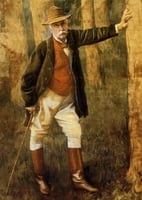
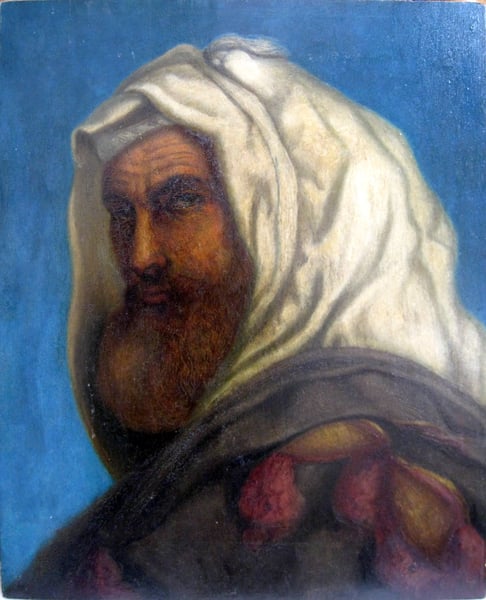
Analisi esperta di Etude di James Tissot
Stile: Symbolism · Genere: sketch and study
Expert Analysis: "Etude" by James Tissot
Within the context of Symbolism, James Tissot’s Etude represents a compelling and somewhat unorthodox artifact. Tissot is historically categorized as a master of social realism and later a devotional illustrator, making a work designated as Symbolist a provocative departure that demands deeper scrutiny. Its significance lies precisely in this tension between Tissot’s reputation and the work's stylistic alignment with the Symbolist ethos.
The Genre as a Symbolist Vehicle
The genre of sketch and study is crucial to understanding this work’s significance within the Symbolist period. Symbolism rejected the exhaustive, materialist documentation of the external world in favor of interiority, essence, and the unspoken. An étude (study) is by its very nature incomplete—a state of becoming rather than a finished declaration.
By working within this genre, Tissot leans into the Symbolist ideal of suggestion over description. The sketch does not strive for the polished verisimilitude of his famous social canvases. Instead, it acts as a direct conduit for the artist’s inner vision. The raw, abbreviated lines or tonal washes of a study strip away the distractions of costume, setting, and narrative, leaving only the emotional or spiritual core of the subject. The very "unfinished" quality of the work invites the viewer to complete the image intellectually, engaging in the subjective interpretation that is the hallmark of Symbolism.
A Pivot toward the Transcendent
For Tissot, Etude occupies a pivotal space. It appears to bridge his early career as a chronicler of the mundane with his later, deeply spiritual biblical illustrations. In this context, the work is significant as a laboratory of the soul. The act of "studying" here is not merely academic—it becomes a Symbolist quest for the ideal form hidden behind the realist facade.
By classifying this sketch as Symbolism, the work suggests that Tissot was experimenting with a more metaphysical approach to his craft. The subject of the study (likely a figure or face, as typical of his output) is no longer a specific individual from Parisian or London society, but a vessel for a broader, more archetypal emotion or state of being. This elevates the humble genre piece into a philosophical statement: the artist is not just recording what he sees, but searching for what it means.
Significance in the Period
In the broader landscape of the Symbolist movement, Etude is significant because it demonstrates the permeation of Symbolist thought beyond its core practitioners (such as Moreau or Redon) into artists primarily known for other modes. It proves that the Symbolist impulse—the desire to find the transcendent within the immediate—
Visivamente simili
20 opere con composizione e palette affini
Josef Kriehuber, Austrian Lithographer and Artist (Self-Portrait)
Josef Kriehuber
Saint James the Less
Peter Paul Rubens
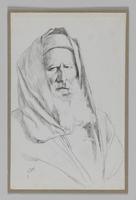
Type of Jew
James Tissot
Old Jew
Alexander Bogen
Portrait of an old man
Fyodor Bronnikov
Study for Jeremiah
Jean Victor Schnetz
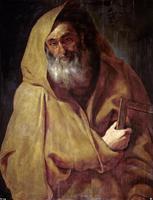
St James the Minor
Peter Paul Rubens
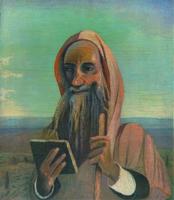
Teacher in Morocco
Tivadar Kosztka Csontvary
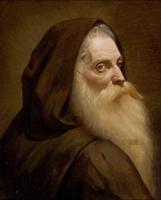
Capuchin Monk
Jose Ferraz de Almeida Junior
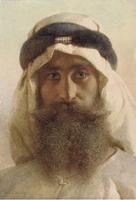
Hassan Ben Moosa, a bedowee of the Howareen Tribe
Carl Haag
Self-portrait as Doge Gritti
Francesco Hayez
PORTRAIT OF MAN WITH BEARD (PROPHET?)
Francesco Podesti
Algerian Spahi Mohamed Osman from Oran
Eugène Burnand
Oriental woman
Louise Amans
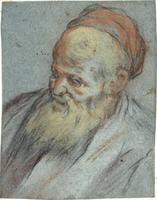
Bust-Length Study of a Bearded Man with Cap in Three-Quarter View
Jacopo Bassano
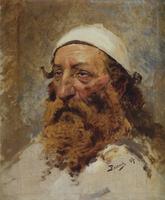
Head of Jewish Man
Vasily Polenov
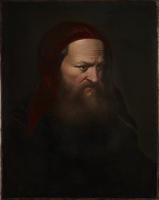
Benvenuto Cellini, Self-Portrait
Benvenuto Cellini
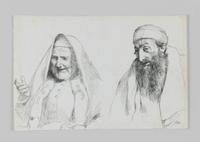
Jew and Jewess, illustration from 'The Life of Our Lord Jesus Christ'
James Tissot
Trainee
Vilen Barsky
Self Portrait
Domenico Beccafumi