
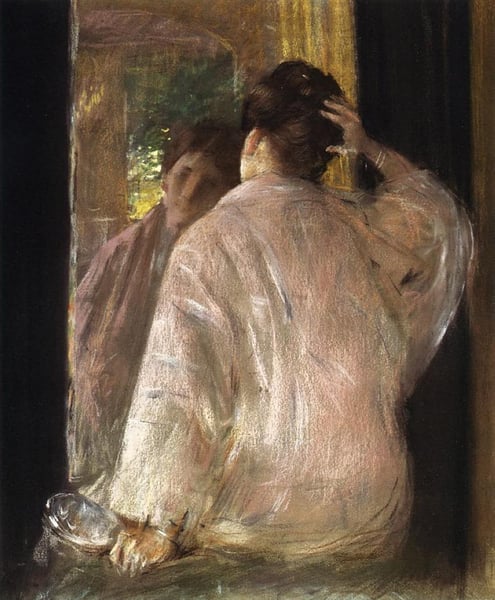
Expert analysis of William Merritt Chase’s Dorothy
Style: Impressionism · Genre: genre painting
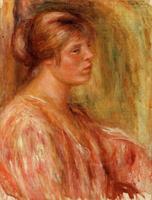
William Merritt Chase’s Dorothy is a compelling example of American Impressionism, rendered as a genre painting that elevates an everyday domestic moment into a study of light, atmosphere, and fleeting human presence. The work’s significance lies in how Chase merges the core tenets of Impressionism—luminous color, visible brushwork, and the capture of transient effects—with the narrative intimacy of genre painting. Rather than a formal portrait, Dorothy presents a slice of life, likely depicting a child or young woman in a casual, unposed attitude. This focus on the ordinary, filtered through Chase’s sophisticated handling of light and shadow, marks the painting as a key work in his oeuvre and in the broader American Impressionist movement. The artist’s ability to infuse a simple scene with warmth and immediacy demonstrates his mastery of the style’s chromatic and textural possibilities, making Dorothy a significant piece for its synthesis of impressionist technique with the sentimental realism characteristic of American genre painting.
Museum / Gallery
Visually similar
20 works with related composition and palette
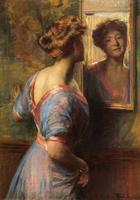
A Passing Glance
Thomas Pollock Anshutz
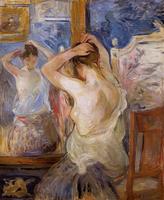
Before the Mirror
Berthe Morisot
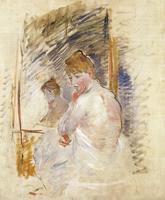
Getting out of Bed
Berthe Morisot
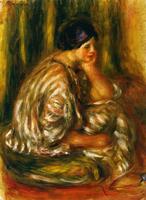
Woman in an Oriental Costume
Pierre-Auguste Renoir
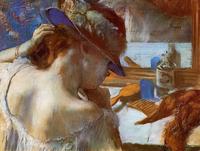
At the Mirror
Edgar Degas
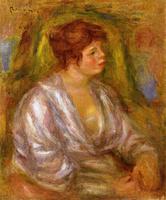
Portrait of a Woman
Pierre-Auguste Renoir
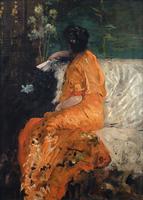
The orange kimono
Giuseppe De Nittis
Woman with a Cat
Edouard Manet
By the window
Konstantin Korovin
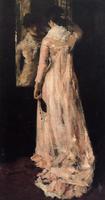
The Mirror
William Merritt Chase
Woman with an Album
Antonio Mancini
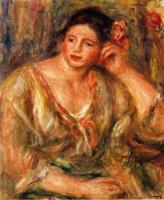
Madeleine Leaning on Her Elbow with Flowers in Her Hair
Pierre-Auguste Renoir

The Little Reader
Pierre-Auguste Renoir

Seated Actress with Mirror
William James Glackens
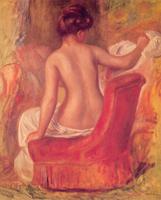
Nude in a Chair
Pierre-Auguste Renoir

Morning Reflections
Robert Lewis Reid
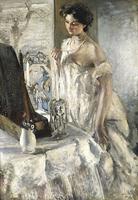
The Pearl Necklace
Henry Tonks
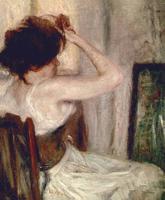
Woman in the mirror
Umberto Veruda
Portrait of a Woman
Pierre-Auguste Renoir

Woman With a Chinese Cup
Jozsef Rippl-Ronai