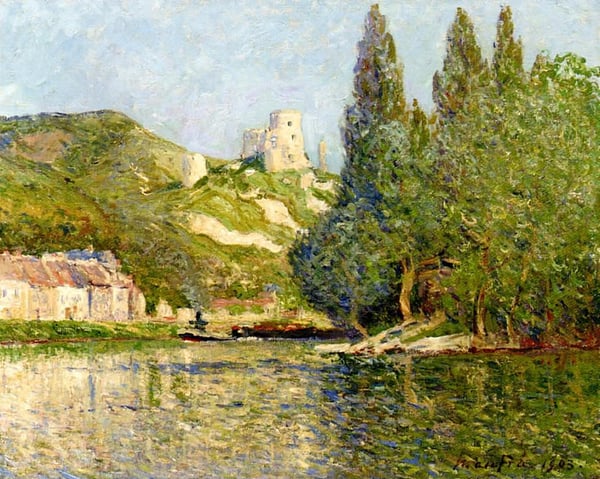
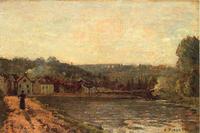
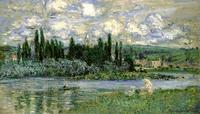
Expert Analysis of "The Castle Gaillard" by Maxime Maufra
As a Post-Impressionist landscape, The Castle Gaillard exemplifies the movement's departure from Impressionism’s fleeting naturalism toward a more structured, expressive treatment of form and color. Maxime Maufra, though less widely known than his contemporaries, was a key figure in the Pont-Aven school alongside Gauguin and Sérusier. This work’s significance lies in its mediation between direct observation and subjective interpretation—a hallmark of Post-Impressionism.
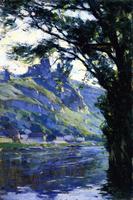
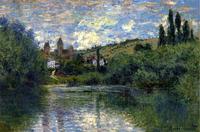
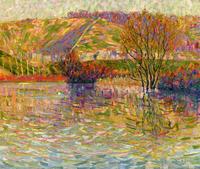
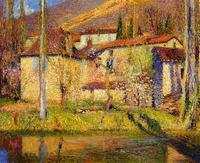
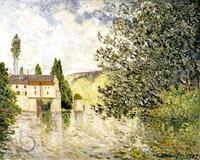
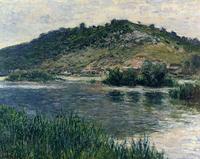
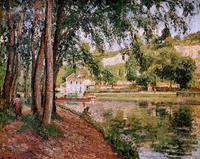
The subject—Château Gaillard, the ruined medieval fortress in Normandy—is historically charged, but Maufra does not simply document it. Instead, he likely uses bold, rhythmic brushwork and heightened, non-local color to evoke the atmosphere and solidity of the site. The castle’s heavy stone masses are rendered with simplified contours and flattened planes, reflecting the synthetist influence of Gauguin. At the same time, Maufra retains a vibrant, luminous palette—perhaps ochres, greens, and blues—that anchors the scene in a specific time of day, bridging Impressionist light with Post-Impressionist emotional resonance.
What makes this painting significant within its style is its demonstration of how Post-Impressionist landscape could preserve a sense of place while asserting the artist’s inner vision. Maufra’s work stands as a testament to the period’s move toward abstraction and symbolic meaning, transforming a historic ruin into a timeless meditation on nature, decay, and the artist’s own expressive hand.